简体中文
简体中文 English
- PRODUCTSIndustrial PoE Media Converter Industrial Media Converter Industrial Unmanaged PoE Switch Industrial Managed PoE Switch Industrial Unmanaged Ethernet Switch Industrial Managed Ethernet Switch Industrial PoE Injector Industrial PoE Splitter Industrial PoE Extender DIN-Rail Power Supply Rackmount DIN-Rail BracketHDMI Over Fiber ConverterSDI Over Fiber ConverterSDI Over Fiber Converter 12G-SDI Over Fiber Converter 3G-SDI Over Fiber Converter HD-SDI Over Fiber ConverterDVI Over Fiber ConverterAHD/CVI/TVI Over Fiber
- SOLUTIONS
- Download
- ABOUT
- CONTACT


Choosing the right Ethernet switch is one of the most important decisions when building a reliable network. Whether you are deploying a factory automation system, installing an IP surveillance network, or upgrading an office infrastructure, selecting between a managed and an unmanaged Ethernet switch can significantly impact network performance, security, and future scalability.
While both types of switches connect network devices, they are designed for different applications and management requirements. Understanding their differences will help you make the right investment for your business.
In this guide, we'll compare managed and unmanaged Ethernet switches, explain their key features, and help you determine which solution best fits your network.
What Is a Managed Ethernet Switch?
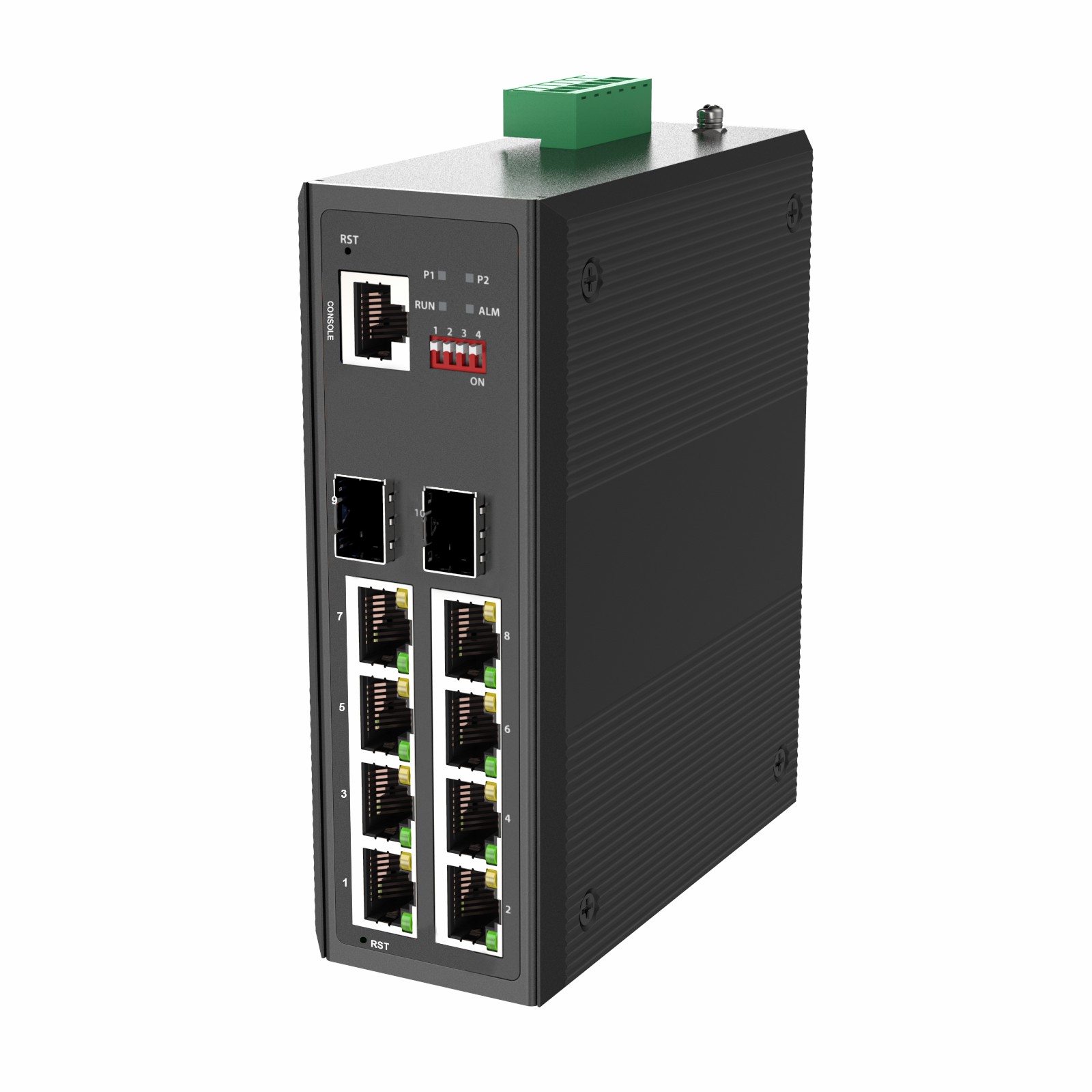
A managed Ethernet switch allows administrators to configure, monitor, and optimize network traffic through a web interface, command-line interface (CLI), or network management software.
Unlike plug-and-play switches, managed switches provide advanced control over network performance, security, and troubleshooting.
Typical management features include:
VLAN (Virtual Local Area Network)
Quality of Service (QoS)
SNMP Network Monitoring
IGMP Snooping
Port Mirroring
Link Aggregation
RSTP and MSTP
ERPS Ring Redundancy
Access Control Lists (ACL)
Loop Prevention
These capabilities make managed switches ideal for complex and mission-critical networks.
What Is an Unmanaged Ethernet Switch?
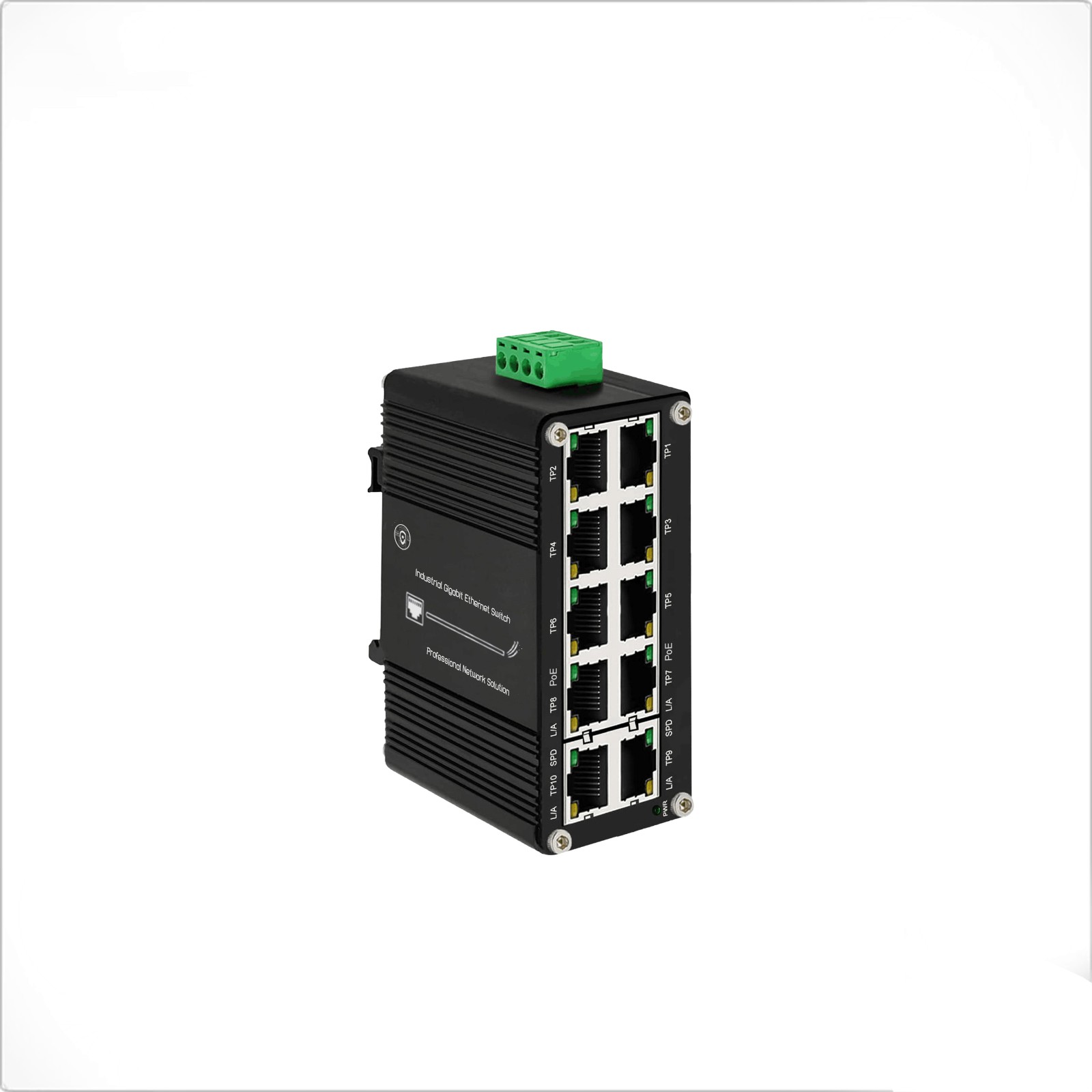
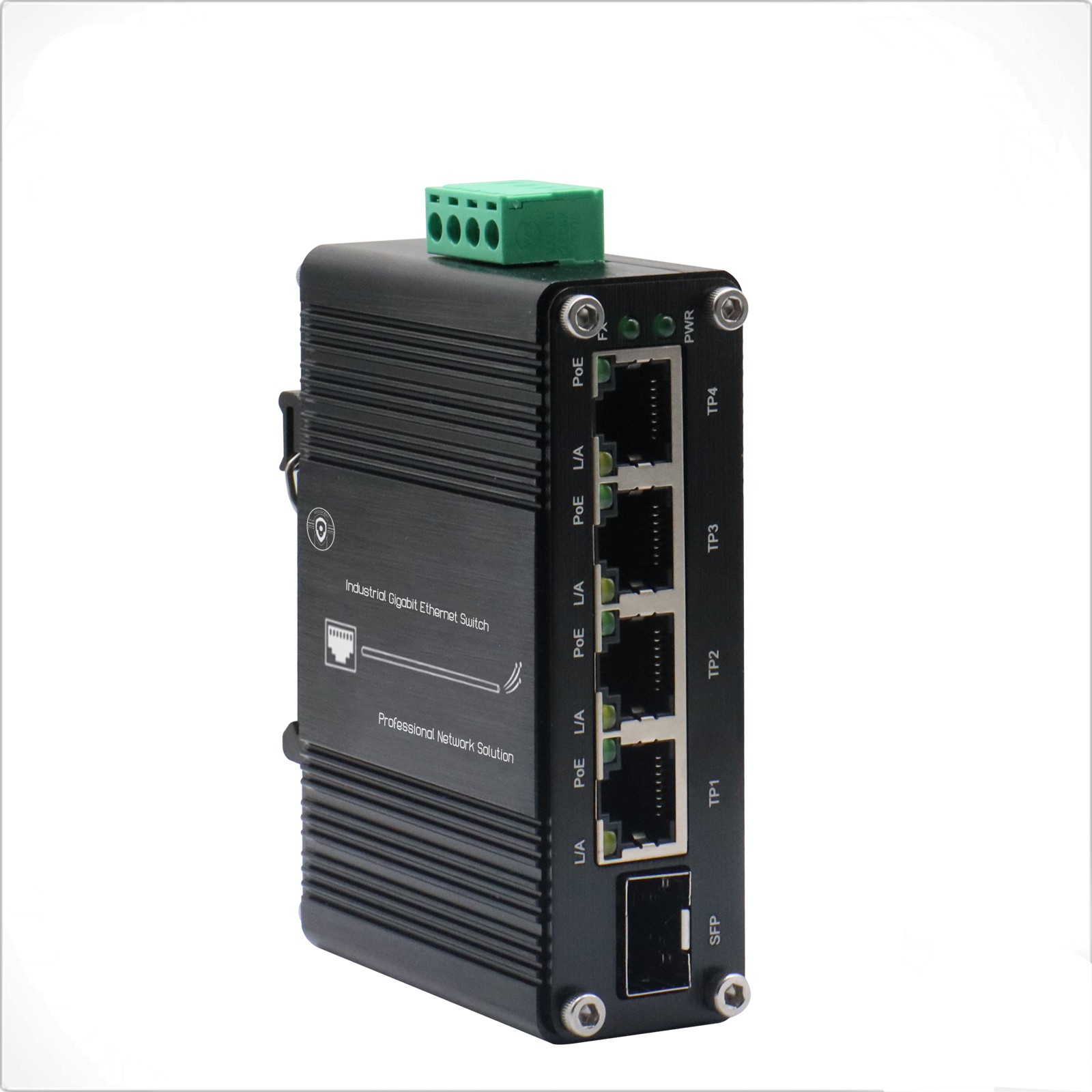
An unmanaged Ethernet switch is a plug-and-play networking device that requires no configuration. Simply connect the power and Ethernet cables, and the switch automatically begins forwarding network traffic.
Key advantages include:
Easy installation
No technical configuration required
Lower purchase cost
Reliable day-to-day operation
Minimal maintenance
Because of their simplicity, unmanaged switches are widely used in small offices, retail stores, workshops, classrooms, and basic surveillance systems.
Managed vs. Unmanaged Ethernet Switch: Key Differences
| Feature | Managed Switch | Unmanaged Switch |
|---|---|---|
| Configuration | Full configuration options | Plug and play |
| VLAN Support | Yes | No |
| QoS | Yes | No |
| Network Monitoring | Yes | No |
| Remote Management | Yes | No |
| Port Mirroring | Yes | No |
| Link Aggregation | Yes | No |
| Network Security | Advanced | Basic |
| Troubleshooting | Detailed diagnostics | Limited |
| Scalability | Excellent | Limited |
| Typical Users | Enterprises, factories, system integrators | Small offices, simple networks |
| Cost | Higher | Lower |
Although unmanaged switches are less expensive, managed switches provide significantly greater flexibility and long-term value for growing networks.
When Should You Choose a Managed Switch?
Managed Ethernet switches are recommended when network performance, uptime, and security are critical.
Typical applications include:
Factory Automation
Connect PLCs, industrial robots, HMIs, and machine vision systems while managing traffic between production equipment.
Industrial IoT
Support thousands of connected devices with efficient traffic management and network segmentation.
CCTV Surveillance
Prioritize video traffic using QoS, isolate camera networks with VLANs, and monitor switch health remotely.
Enterprise Networks
Improve network security, optimize bandwidth, and simplify IT management.
Transportation Systems
Support railway, metro, highway, and intelligent transportation networks that require high availability and fast recovery.
When Is an Unmanaged Switch the Better Choice?
An unmanaged switch is an excellent option when simplicity and affordability are the primary goals.
Common applications include:
Small offices
Retail stores
Home offices
Classrooms
Conference rooms
Basic IP camera installations
Temporary project networks
Small workshops
These environments usually do not require advanced traffic management or remote monitoring.
How to Choose the Right Ethernet Switch
Before selecting a switch, consider the following factors.
Number of Ports
Choose enough Ethernet ports for your current devices while leaving room for future expansion.
PoE Requirements
If you need to power IP cameras, wireless access points, VoIP phones, or industrial terminals, select a PoE switch with an appropriate PoE power budget.
Fiber Connectivity
For long-distance transmission or environments with strong electromagnetic interference, choose models with Gigabit or 10G SFP uplink ports.
Network Size
Small networks may only require an unmanaged switch, while larger networks benefit from advanced management features.
Operating Environment
Industrial environments often require industrial-grade switches with wide operating temperatures, fanless cooling, surge protection, and redundant power inputs.
Future Expansion
If your network is expected to grow, investing in a managed switch today can reduce future upgrade costs and simplify expansion.
Why Choose WXA Ethernet Switches?
WXA provides professional Ethernet switching solutions for industrial automation, surveillance, and enterprise networking projects.
Our advantages include:
More than 13 years of manufacturing experience
Complete managed and unmanaged product portfolio
Industrial-grade components for long-term reliability
CE, FCC, and RoHS certified products
Wide operating temperature from -40°C to +75°C for industrial models
Gigabit and 10G networking solutions
PoE and non-PoE product options
OEM and ODM customization services
Fast delivery from stable production capacity
Professional technical support
Five-year warranty for industrial switch series
Our products are trusted by system integrators, distributors, and engineering contractors in industrial automation, transportation, energy, and security projects worldwide.
Frequently Asked Questions
Do I need a managed Ethernet switch?
If your network requires VLANs, traffic prioritization, remote monitoring, or advanced security, a managed switch is the better choice. For simple plug-and-play installations, an unmanaged switch is usually sufficient.
Can an unmanaged switch support VLANs?
No. VLAN configuration is a feature available only on managed switches.
Is a managed switch worth the additional cost?
For businesses planning to expand or requiring reliable network management, a managed switch can reduce downtime, improve security, and simplify maintenance, providing greater long-term value.
Which switch is better for CCTV systems?
Small surveillance systems can operate effectively with unmanaged PoE switches. Larger camera deployments generally benefit from managed PoE switches because they support VLANs, QoS, and network monitoring.
Can I replace an unmanaged switch with a managed switch later?
Yes. Many organizations start with unmanaged switches and upgrade to managed switches as their network grows or requires more advanced features.
Industrial PoE Switch | Managed PoE Switch | Gigabit PoE Switch | DIN Rail PoE Switch | Industrial Ethernet Switch | Smart Transportation Network | Traffic Monitoring System | Outdoor PoE Switch | PoE for CCTV | Fiber Uplink PoE Switch