简体中文
简体中文 English
- PRODUCTSIndustrial PoE Media Converter Industrial Media Converter Industrial Unmanaged PoE Switch Industrial Managed PoE Switch Industrial Unmanaged Ethernet Switch Industrial Managed Ethernet Switch Industrial PoE Injector Industrial PoE Splitter Industrial PoE Extender DIN-Rail Power Supply Rackmount DIN-Rail BracketHDMI Over Fiber ConverterSDI Over Fiber ConverterSDI Over Fiber Converter 12G-SDI Over Fiber Converter 3G-SDI Over Fiber Converter HD-SDI Over Fiber ConverterDVI Over Fiber ConverterAHD/CVI/TVI Over Fiber
- SOLUTIONS
- Download
- ABOUT
- CONTACT


As industrial automation and smart manufacturing continue to evolve, reliable network communication has become the backbone of modern production systems. From factory automation and intelligent transportation to energy management and industrial surveillance, every connected device depends on a stable and efficient network.
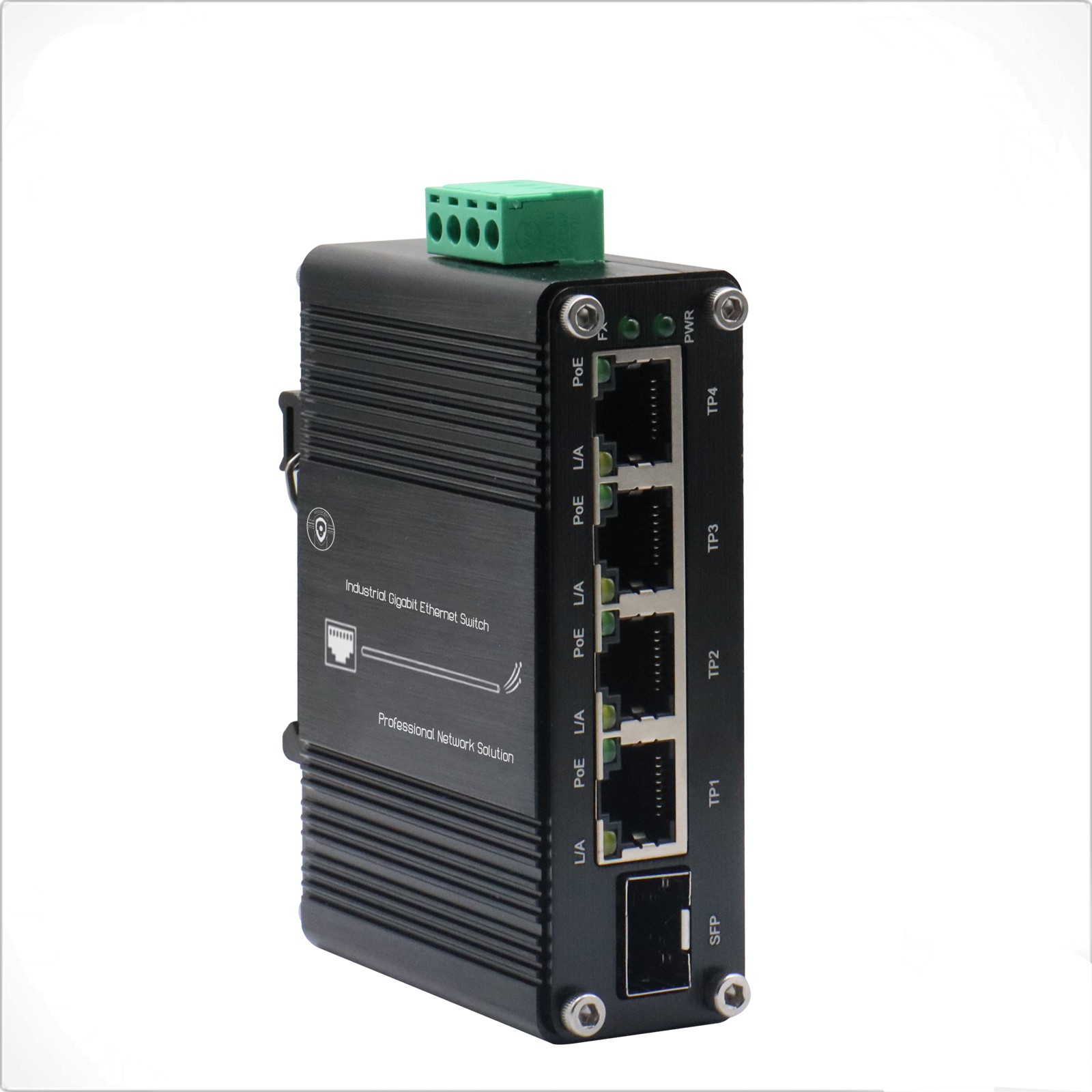
Choosing the right industrial Ethernet switch is essential for ensuring reliable communication, minimizing downtime, and supporting future network expansion. However, with so many models available, selecting the right switch can be challenging.
This guide explains the key factors you should consider before purchasing an industrial Ethernet switch and provides practical recommendations for different industrial applications.
Why Industrial Ethernet Switches Matter
Unlike commercial switches designed for office environments, industrial Ethernet switches are built to operate in demanding conditions where reliability is critical.
Industrial networks often face:
Extreme temperatures
Dust and humidity
Vibration and shock
Electromagnetic interference (EMI)
Continuous 24/7 operation
Industrial Ethernet switches are specifically engineered to maintain stable performance under these challenging conditions while protecting critical communication between controllers, sensors, cameras, and industrial equipment.
Key Factors to Consider
Number of Ethernet Ports
The first step is determining how many devices need to be connected.
Consider not only your current equipment but also future expansion. Selecting a switch with additional available ports can help reduce future upgrade costs.
Common options include:
5 Ports
8 Ports
10 Ports
16 Ports
24 Ports
48 Ports
PoE or Non-PoE
Power over Ethernet (PoE) allows both power and data to be transmitted through a single Ethernet cable.
Choose a PoE switch if you need to power devices such as:
IP Cameras
Wireless Access Points
VoIP Phones
Industrial Sensors
Edge Computing Devices
For equipment with independent power supplies, a non-PoE switch may provide a more cost-effective solution.
Managed or Unmanaged
Managed Industrial Switch
Managed switches provide advanced network control features including:
VLAN
QoS
SNMP
IGMP Snooping
RSTP
MSTP
ERPS
Link Aggregation
Port Mirroring
They are ideal for large industrial networks where performance, security, and remote management are important.
Unmanaged Industrial Switch
Unmanaged switches require no configuration.
They are suitable for:
Small automation systems
Simple machine networks
Basic surveillance projects
Industrial control cabinets
Their plug-and-play operation makes installation fast and easy.
Gigabit or Fast Ethernet
Network speed depends on the application.
Fast Ethernet (10/100 Mbps) is often sufficient for basic industrial devices.
Gigabit Ethernet (10/100/1000 Mbps) is recommended for:
Machine Vision
Industrial Cameras
High-Speed PLC Communication
Industrial IoT
Large Data Transfers
Choosing Gigabit switches also helps prepare your network for future upgrades.
Fiber Uplink Requirements
Industrial environments frequently require long-distance communication.
Switches equipped with Gigabit SFP or 10G SFP+ uplink ports offer several advantages:
Longer transmission distances
Better EMI immunity
Higher bandwidth
Flexible network expansion
Fiber uplinks are commonly used in factories, campuses, transportation systems, and utility networks.
Operating Temperature
Temperature is one of the most important considerations.
Industrial-grade switches typically support operating temperatures from -40°C to +75°C, ensuring stable performance in both extremely cold and hot environments.
Commercial switches generally operate only between 0°C and +50°C, making them unsuitable for many industrial applications.
Power Input
Power reliability directly affects network uptime.
Industrial Ethernet switches commonly support dual redundant DC power inputs.
If one power source fails, the backup power automatically keeps the network running, reducing the risk of unexpected downtime.
Surge and ESD Protection
Electrical surges and electrostatic discharge can damage networking equipment.
Industrial switches often include:
Surge Protection
ESD Protection
High EMC Immunity
These features improve reliability in electrically noisy environments.
Installation Method
Industrial Ethernet switches are available in different mounting styles.
DIN Rail Mounting
Ideal for:
Control cabinets
Production equipment
Industrial automation
Provides compact installation and easy maintenance.
Rackmount Installation
Suitable for:
Server rooms
Data centers
Industrial network cabinets
Enterprise backbone networks
Rackmount switches provide higher port density for larger networks.
Choosing the Right Switch for Different Applications
Factory Automation
Recommended features:
Managed Switch
Gigabit Ethernet
Dual Power Input
Wide Temperature
VLAN Support
Industrial Control Cabinets
Recommended features:
Compact DIN Rail Design
Fanless Cooling
Industrial Protection
Redundant Power
CCTV Surveillance
Recommended features:
PoE Support
High PoE Budget
VLAN
QoS
Fiber Uplink
Transportation Systems
Recommended features:
ERPS Ring Redundancy
Wide Temperature
Surge Protection
Fiber Communication
Energy and Utilities
Recommended features:
Industrial Grade Reliability
Redundant Power
Long-Distance Fiber
High EMC Protection
Industrial IoT
Recommended features:
Gigabit Network
Managed Functions
Remote Monitoring
High Reliability
Common Mistakes to Avoid
Many buyers focus only on price and overlook important technical requirements.
Avoid these common mistakes:
Choosing too few Ethernet ports
Ignoring future network expansion
Underestimating PoE power requirements
Selecting commercial switches for industrial environments
Choosing unmanaged switches for complex networks
Forgetting fiber connectivity requirements
Overlooking operating temperature specifications
Ignoring redundant power input requirements
Planning ahead can significantly reduce maintenance costs and future upgrades.
Why Choose WXA Industrial Ethernet Switches?
WXA has over 13 years of experience designing and manufacturing industrial networking products for customers worldwide.
Our strengths include:
Industrial-grade hardware design
Managed and unmanaged Ethernet switches
PoE and non-PoE product lines
Gigabit and 10G networking solutions
Wide operating temperature from -40°C to +75°C
CE, FCC, and RoHS certified products
OEM and ODM customization services
Fast production and delivery
Professional technical support
Five-year warranty for industrial switch series
Our products are widely used in factory automation, industrial communication, transportation, energy, security, and smart manufacturing projects across global markets.
Frequently Asked Questions
How many ports should an industrial Ethernet switch have?
Choose a switch based on the number of connected devices today, while allowing additional ports for future expansion. Many businesses select switches with 20–30% spare capacity to accommodate network growth.
Should I choose a PoE or non-PoE industrial switch?
A PoE switch is recommended if you need to power IP cameras, wireless access points, or other Ethernet-powered devices. For equipment with separate power supplies, a non-PoE switch may be more economical.
When is a managed industrial switch necessary?
A managed switch is the best choice for networks that require VLANs, traffic prioritization, remote monitoring, redundancy, or advanced security features.
Why are SFP ports important?
SFP fiber ports enable long-distance, high-speed communication and provide better resistance to electromagnetic interference, making them ideal for industrial environments and campus-scale networks.
What operating temperature should an industrial Ethernet switch support?
For most industrial applications, a switch rated from -40°C to +75°C provides reliable operation in harsh indoor and outdoor environments.
Industrial PoE Switch | Managed PoE Switch | Gigabit PoE Switch | DIN Rail PoE Switch | Industrial Ethernet Switch | Smart Transportation Network | Traffic Monitoring System | Outdoor PoE Switch | PoE for CCTV | Fiber Uplink PoE Switch