简体中文
简体中文 English
- PRODUCTSIndustrial PoE Media Converter Industrial Media Converter Industrial Unmanaged PoE Switch Industrial Managed PoE Switch Industrial Unmanaged Ethernet Switch Industrial Managed Ethernet Switch Industrial PoE Injector Industrial PoE Splitter Industrial PoE Extender DIN-Rail Power Supply Rackmount DIN-Rail BracketHDMI Over Fiber ConverterSDI Over Fiber ConverterSDI Over Fiber Converter 12G-SDI Over Fiber Converter 3G-SDI Over Fiber Converter HD-SDI Over Fiber ConverterDVI Over Fiber ConverterAHD/CVI/TVI Over Fiber
- SOLUTIONS
- Download
- ABOUT
- CONTACT


Industrial automation systems require reliable network equipment that can operate continuously in demanding environments. From factory production lines and power distribution systems to transportation infrastructure and industrial control cabinets, network devices must deliver stable performance while occupying minimal space.
A DIN rail Ethernet switch is specifically designed to meet these requirements. With its compact design, industrial-grade durability, and easy installation, it has become a standard networking solution for modern industrial applications.
In this guide, we'll explain what a DIN rail Ethernet switch is, its key benefits, common applications, and how to choose the right model for your project.
What Is a DIN Rail Ethernet Switch?
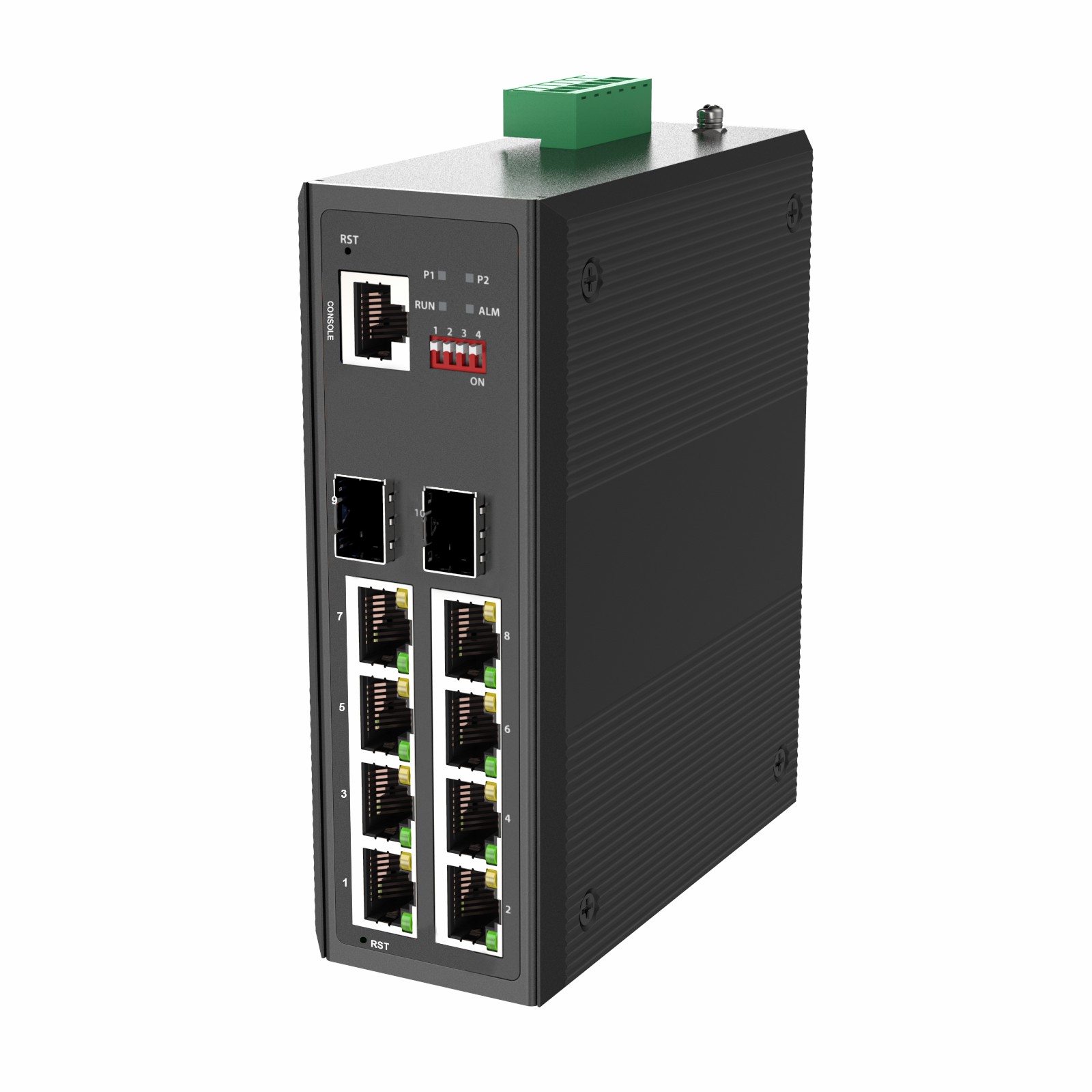
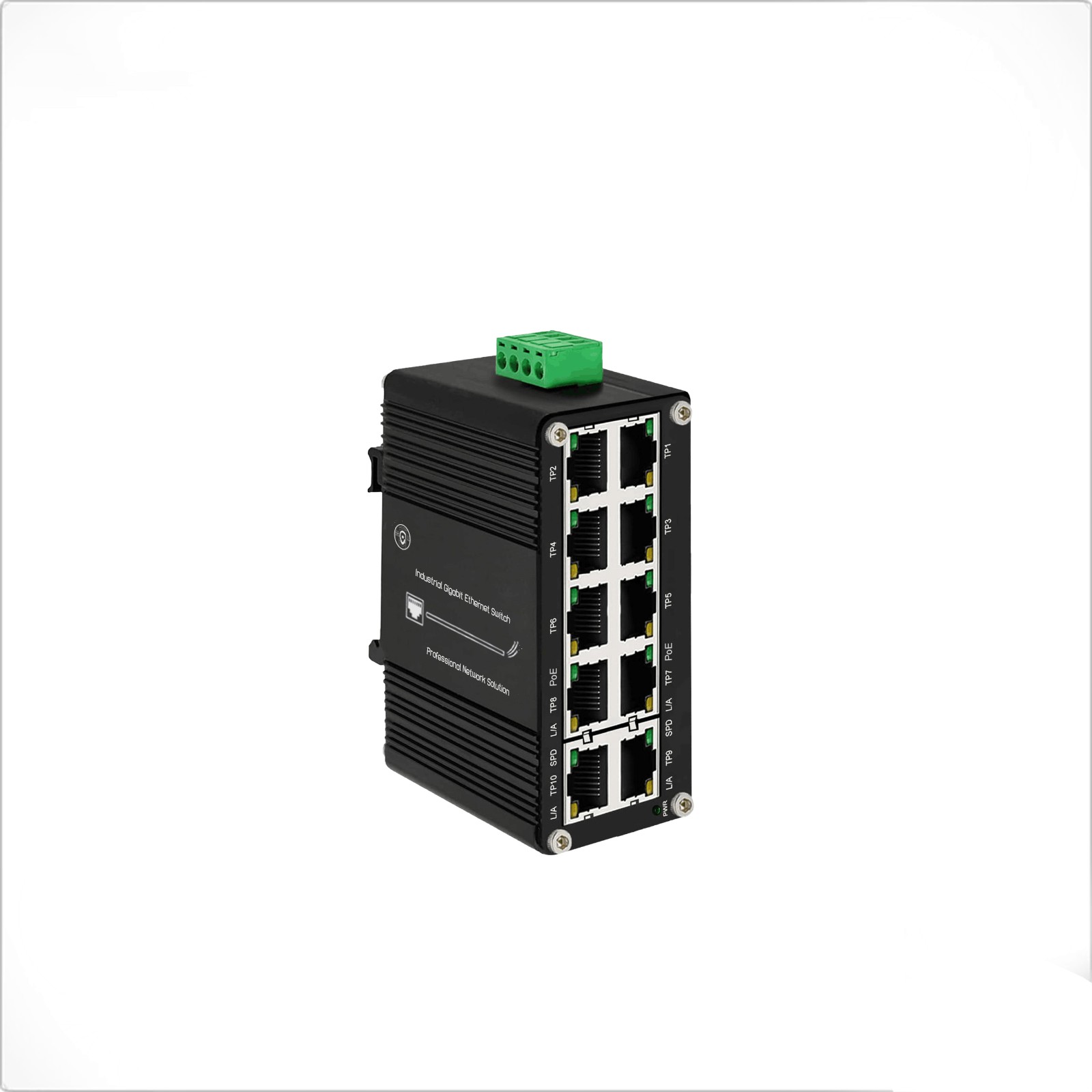
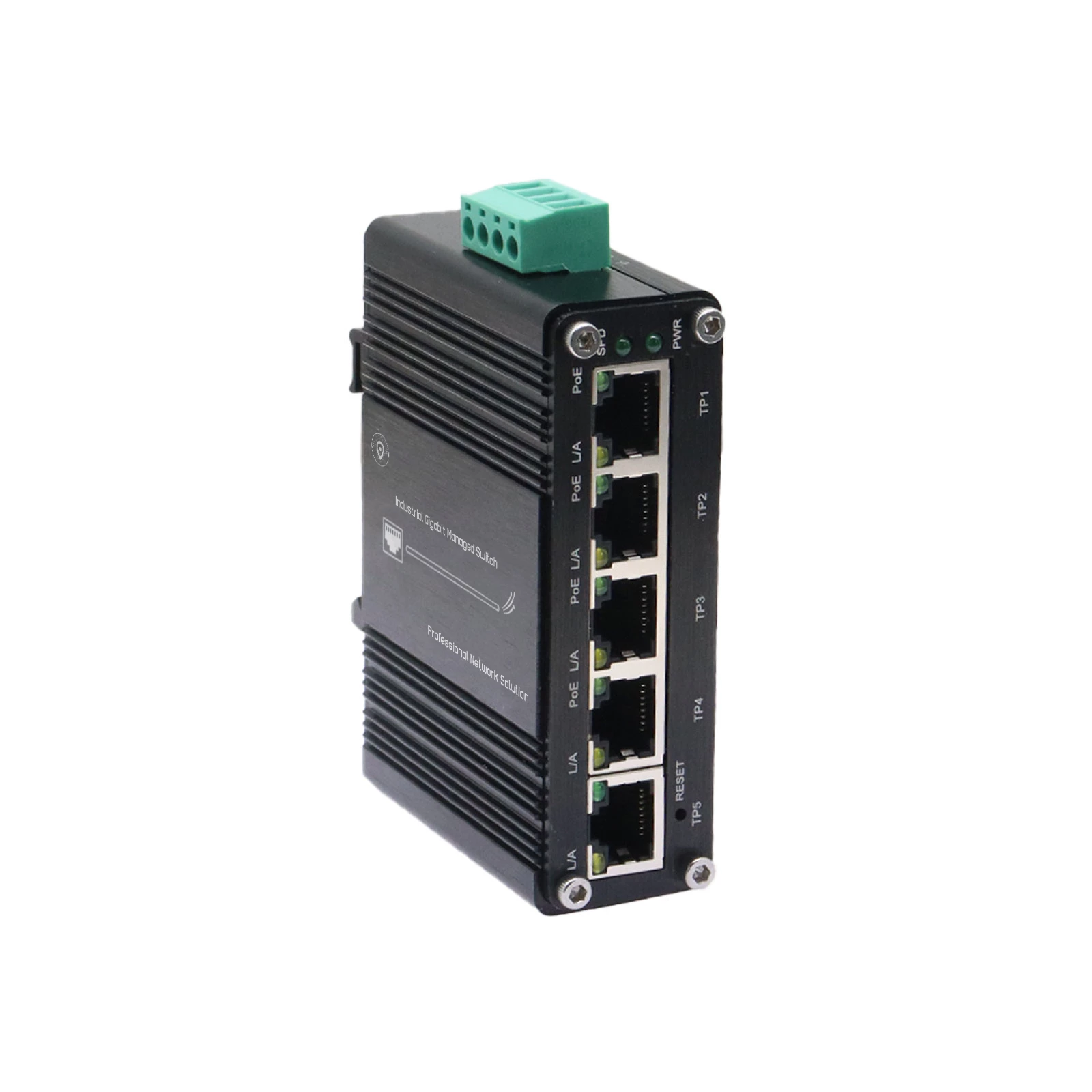
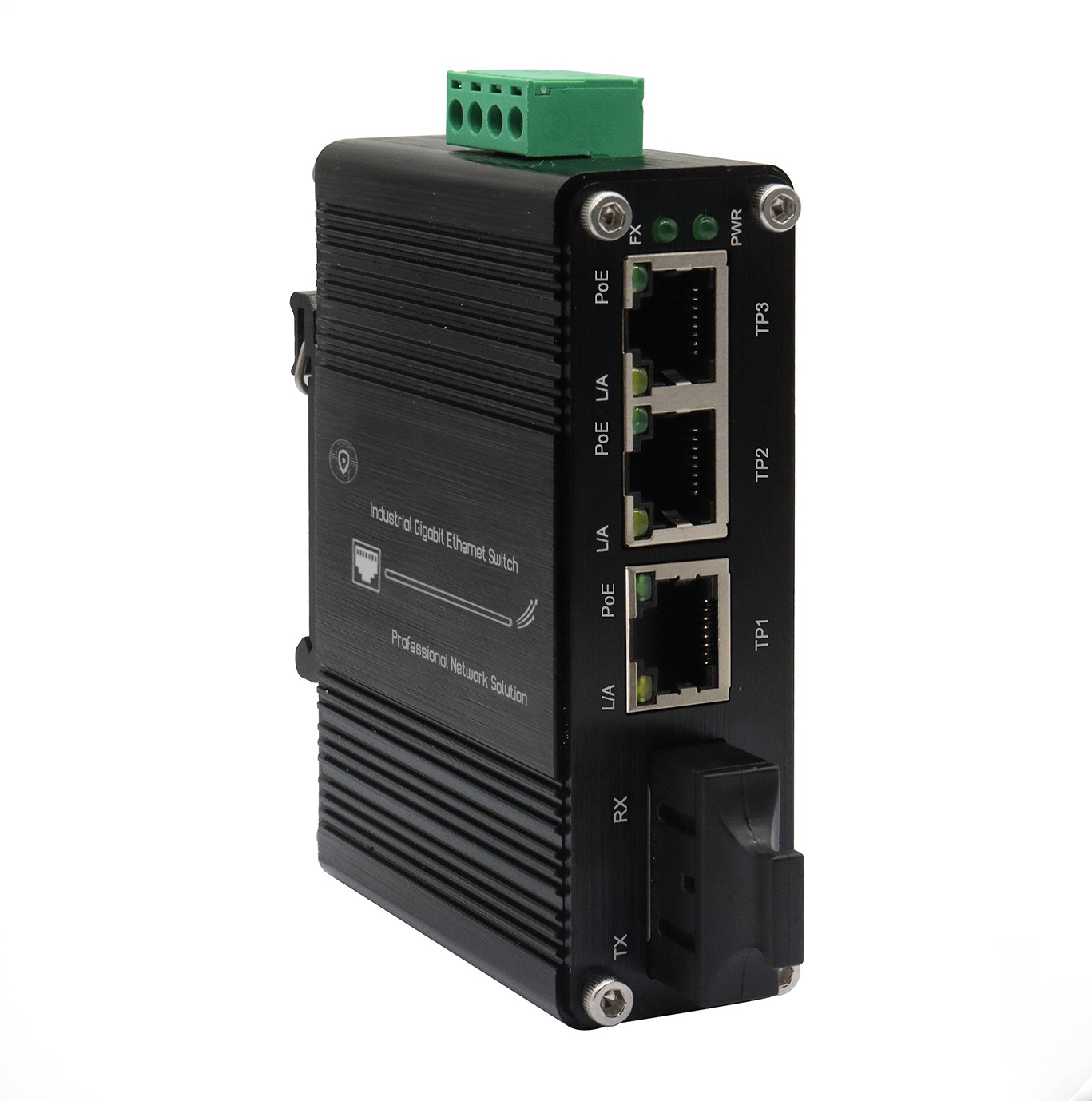
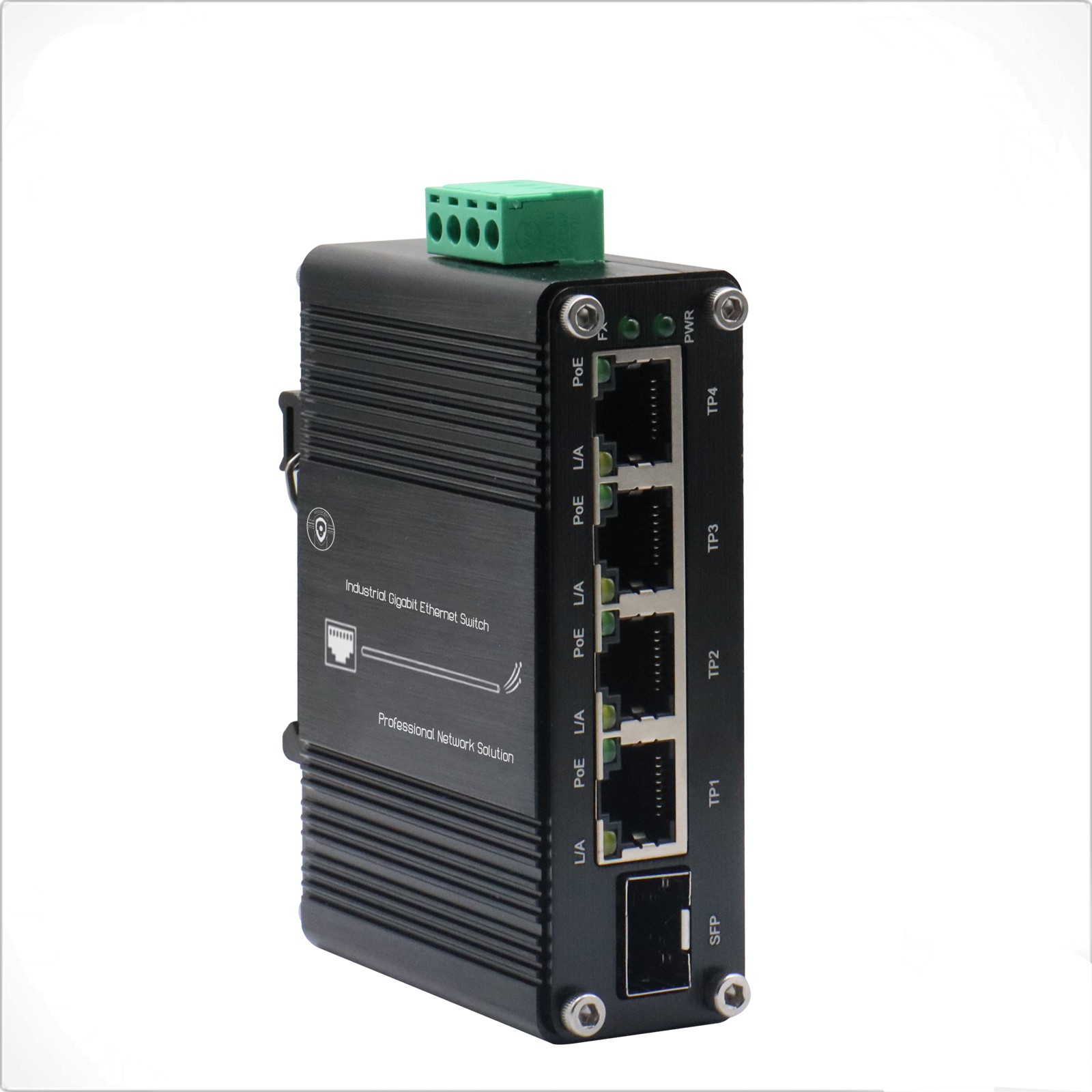
A DIN rail Ethernet switch is an industrial network switch designed to be mounted on a standard 35 mm DIN rail inside electrical cabinets and industrial control panels. Unlike desktop or rackmount switches, DIN rail switches are optimized for industrial environments where space, reliability, and easy maintenance are essential.
Most industrial DIN rail switches support Fast Ethernet or Gigabit Ethernet connectivity and are available in managed and unmanaged versions. Many models also provide Power over Ethernet (PoE), allowing both data and power to be delivered through a single Ethernet cable.
Why Use a DIN Rail Ethernet Switch?
Industrial control systems often include PLCs, HMIs, industrial sensors, IP cameras, and communication gateways. These devices require a stable and organized network infrastructure.
DIN rail Ethernet switches provide several advantages:
Compact design for space-saving installation
Secure mounting inside industrial control cabinets
Simplified cable management
Easy installation and replacement
Reliable operation in harsh industrial environments
Continuous 24/7 performance
These benefits help reduce installation time and maintenance costs while improving overall system reliability.
Key Features of Industrial DIN Rail Ethernet Switches
Wide Operating Temperature
Industrial applications often expose equipment to extreme temperatures. Most industrial DIN rail switches are designed to operate between -40°C and +75°C, making them suitable for both indoor and outdoor installations.
Industrial-Grade Protection
Industrial environments present challenges such as vibration, dust, humidity, and electromagnetic interference.
Typical protection features include:
IP40 aluminum housing
Fanless cooling design
High EMC immunity
Surge and ESD protection
Anti-vibration construction
These features improve long-term reliability in demanding environments.
Dual Power Inputs
Many industrial DIN rail switches feature dual redundant DC power inputs.
If one power source fails, the switch automatically continues operating using the backup power supply, helping minimize downtime in mission-critical applications.
Gigabit and Fiber Connectivity
Industrial networks often require high-speed communication between controllers, servers, and remote devices.
Common interface options include:
10/100 Mbps Ethernet
10/100/1000 Mbps Gigabit Ethernet
Gigabit SFP fiber uplink ports
10G SFP+ uplink options
Fiber ports provide longer transmission distances and greater resistance to electromagnetic interference.
Managed vs. Unmanaged DIN Rail Ethernet Switches
Choosing between a managed and unmanaged switch depends on your network requirements.
Managed DIN Rail Switch
Managed switches provide advanced networking features, including:
VLAN
Quality of Service (QoS)
SNMP monitoring
IGMP Snooping
RSTP and MSTP
ERPS ring redundancy
Link aggregation
Port mirroring
These features are ideal for large industrial networks that require remote monitoring, traffic optimization, and high availability.
Unmanaged DIN Rail Switch
Unmanaged switches are plug-and-play devices that require no configuration.
They are suitable for:
Small production lines
Industrial control cabinets
Simple automation systems
Basic surveillance networks
They offer an economical solution where advanced network management is not required.
Common Applications
DIN rail Ethernet switches are widely used across many industries.
Factory Automation
Connect PLCs, industrial robots, machine vision systems, and production equipment for reliable communication.
Industrial Control Cabinets
Provide organized and secure networking inside electrical cabinets while saving installation space.
Smart Manufacturing
Support Industrial IoT (IIoT), real-time monitoring, and automated production systems.
Transportation
Enable stable communication for railway systems, metro networks, highways, and intelligent transportation infrastructure.
Energy and Utilities
Connect substations, solar power plants, wind farms, and power monitoring systems.
Security Surveillance
Power and connect industrial IP cameras deployed in factories, warehouses, transportation hubs, and outdoor locations.
How to Choose the Right DIN Rail Ethernet Switch
Before purchasing, consider the following factors.
Number of Ports
Select a switch with sufficient Ethernet ports for your current devices while allowing room for future expansion.
PoE or Non-PoE
If your devices require power over Ethernet, choose a PoE model that supports IEEE 802.3af, 802.3at, or 802.3bt standards and provides an adequate PoE power budget.
Managed or Unmanaged
Managed switches are recommended for larger or more complex networks, while unmanaged models are ideal for simple installations.
Fiber Uplink Requirements
Choose switches with SFP or SFP+ ports if your network requires long-distance communication or operates in environments with significant electromagnetic interference.
Operating Temperature
Verify that the switch's operating temperature range matches your installation environment.
Redundant Power
For mission-critical applications, select models with dual power inputs to improve network availability.
Why Choose WXA Industrial DIN Rail Ethernet Switches?
WXA designs and manufactures industrial networking solutions for demanding applications worldwide.
Our advantages include:
More than 13 years of manufacturing experience
Industrial-grade hardware design
CE, FCC, and RoHS certified products
Managed and unmanaged product lines
Wide operating temperature from -40°C to +75°C
Gigabit and 10G networking solutions
PoE and non-PoE options
OEM and ODM customization services
Fast delivery with stable production capacity
Professional technical support
Five-year warranty for industrial switch series
Our products are widely used in factory automation, transportation, energy, industrial communication, and security surveillance projects.
Frequently Asked Questions
What is a DIN rail Ethernet switch used for?
A DIN rail Ethernet switch connects industrial devices such as PLCs, IP cameras, HMIs, sensors, and controllers while providing reliable communication inside industrial control cabinets and automation systems.
What is the difference between a DIN rail switch and a rackmount switch?
DIN rail switches are compact, industrial-grade devices designed for installation on standard 35 mm DIN rails inside control cabinets. Rackmount switches are larger and typically installed in 19-inch equipment racks for data centers or enterprise networks.
Should I choose a managed or unmanaged DIN rail switch?
Choose a managed switch if your network requires advanced features such as VLANs, QoS, SNMP, or redundancy protocols. An unmanaged switch is sufficient for simple plug-and-play industrial networks.
Do DIN rail Ethernet switches support PoE?
Yes. Many industrial DIN rail switches support IEEE 802.3af, 802.3at (PoE+), and IEEE 802.3bt (PoE++) standards to power devices such as IP cameras, wireless access points, and industrial terminals.
Can DIN rail Ethernet switches be used outdoors?
Yes. When installed in a suitable weatherproof enclosure, industrial DIN rail Ethernet switches are commonly used in outdoor surveillance, transportation, energy, and utility projects.
Industrial PoE Switch | Managed PoE Switch | Gigabit PoE Switch | DIN Rail PoE Switch | Industrial Ethernet Switch | Smart Transportation Network | Traffic Monitoring System | Outdoor PoE Switch | PoE for CCTV | Fiber Uplink PoE Switch