简体中文
简体中文 English
- PRODUCTSIndustrial PoE Media Converter Industrial Media Converter Industrial Unmanaged PoE Switch Industrial Managed PoE Switch Industrial Unmanaged Ethernet Switch Industrial Managed Ethernet Switch Industrial PoE Injector Industrial PoE Splitter Industrial PoE Extender DIN-Rail Power Supply Rackmount DIN-Rail BracketHDMI Over Fiber ConverterSDI Over Fiber ConverterSDI Over Fiber Converter 12G-SDI Over Fiber Converter 3G-SDI Over Fiber Converter HD-SDI Over Fiber ConverterDVI Over Fiber ConverterAHD/CVI/TVI Over Fiber
- SOLUTIONS
- Download
- ABOUT
- CONTACT


When designing an industrial communication network, one of the first decisions engineers, system integrators, and procurement professionals must make is whether to use an Industrial Ethernet Switch or an Industrial PoE Switch.
At first glance, the two devices look nearly identical. Both provide reliable Ethernet connectivity, support industrial-grade operation, and are designed for harsh environments. However, their functionality differs significantly, especially when powering network devices such as IP cameras, wireless access points, and industrial sensors.
Choosing the wrong switch can lead to unnecessary installation costs, additional cabling, insufficient power delivery, or limited network scalability. Understanding the differences between these two switch types helps ensure that your industrial network is both cost-effective and future-ready.
In this guide, we compare Industrial Ethernet Switches and Industrial PoE Switches in detail, including their working principles, key features, advantages, disadvantages, typical applications, and recommendations for different industries.
What Is an Industrial Ethernet Switch?
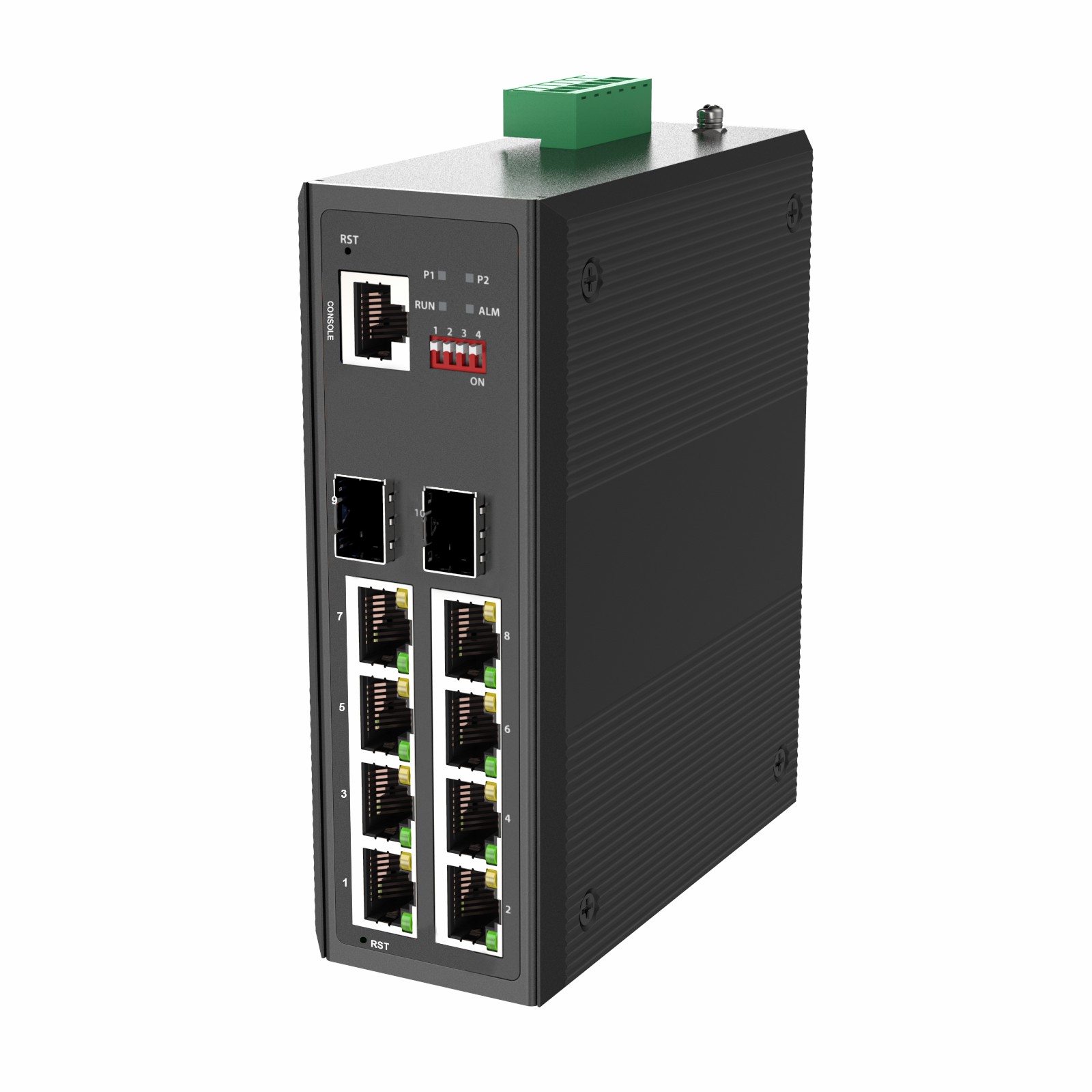
An Industrial Ethernet Switch is a rugged networking device designed to connect multiple Ethernet-enabled devices within an industrial network. It forwards data packets between connected devices, ensuring reliable communication even in demanding environments such as factories, transportation systems, power utilities, and Industrial IoT installations.
Unlike office-grade switches, Industrial Ethernet Switches are specifically engineered to withstand:
Extreme temperatures
Dust and moisture
Electromagnetic interference (EMI)
Mechanical vibration and shock
Continuous 24/7 operation
Industrial Ethernet Switches are available in both managed and unmanaged versions and often support Gigabit Ethernet, fiber uplinks, VLAN, QoS, and industrial redundancy protocols.
Typical Connected Devices
PLC Controllers
Industrial PCs
HMIs
CNC Machines
Industrial Robots
SCADA Systems
Edge Computing Devices
Fiber Media Converters
An Industrial Ethernet Switch focuses solely on transmitting network data. Connected devices must obtain electrical power from separate power supplies.
What Is an Industrial PoE Switch?
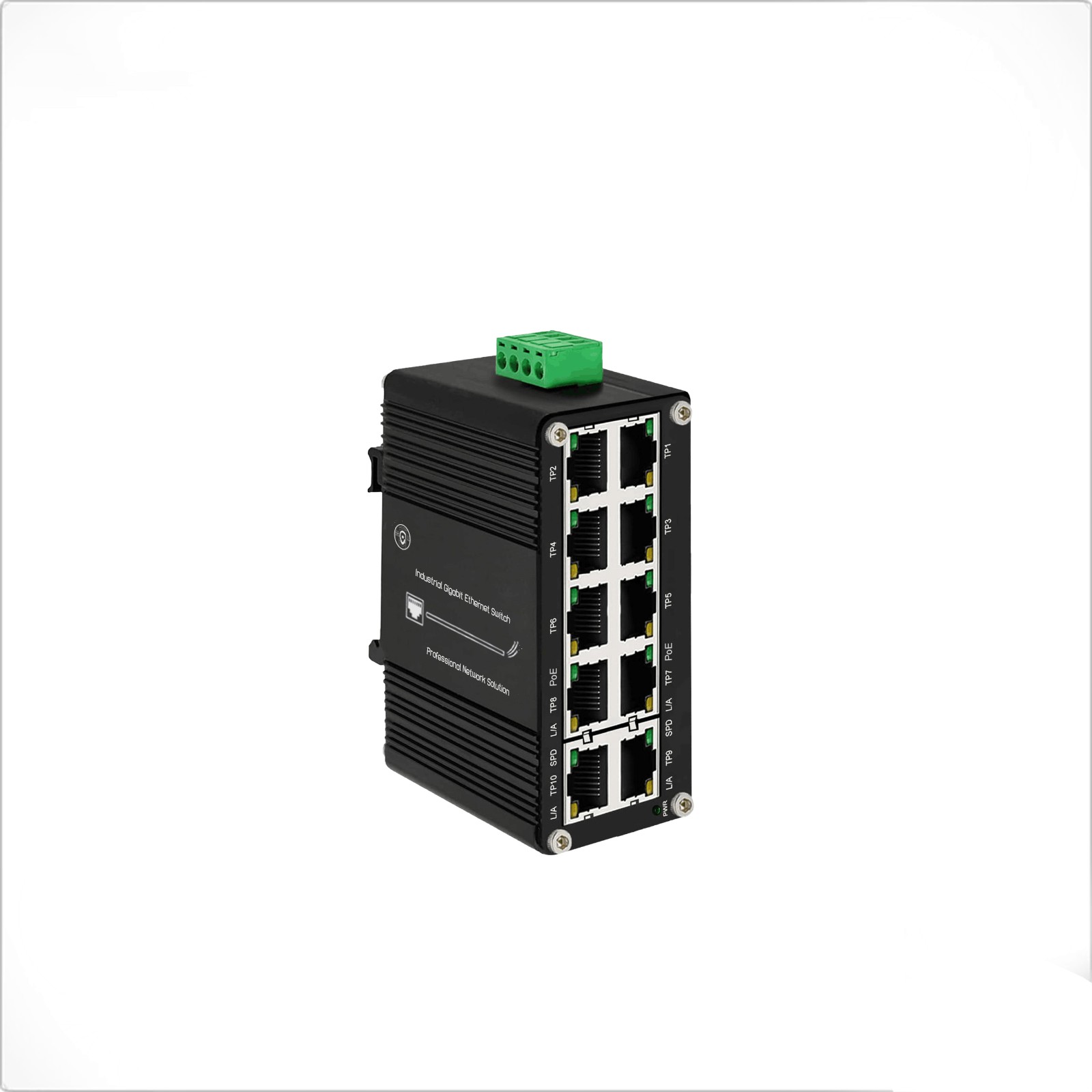
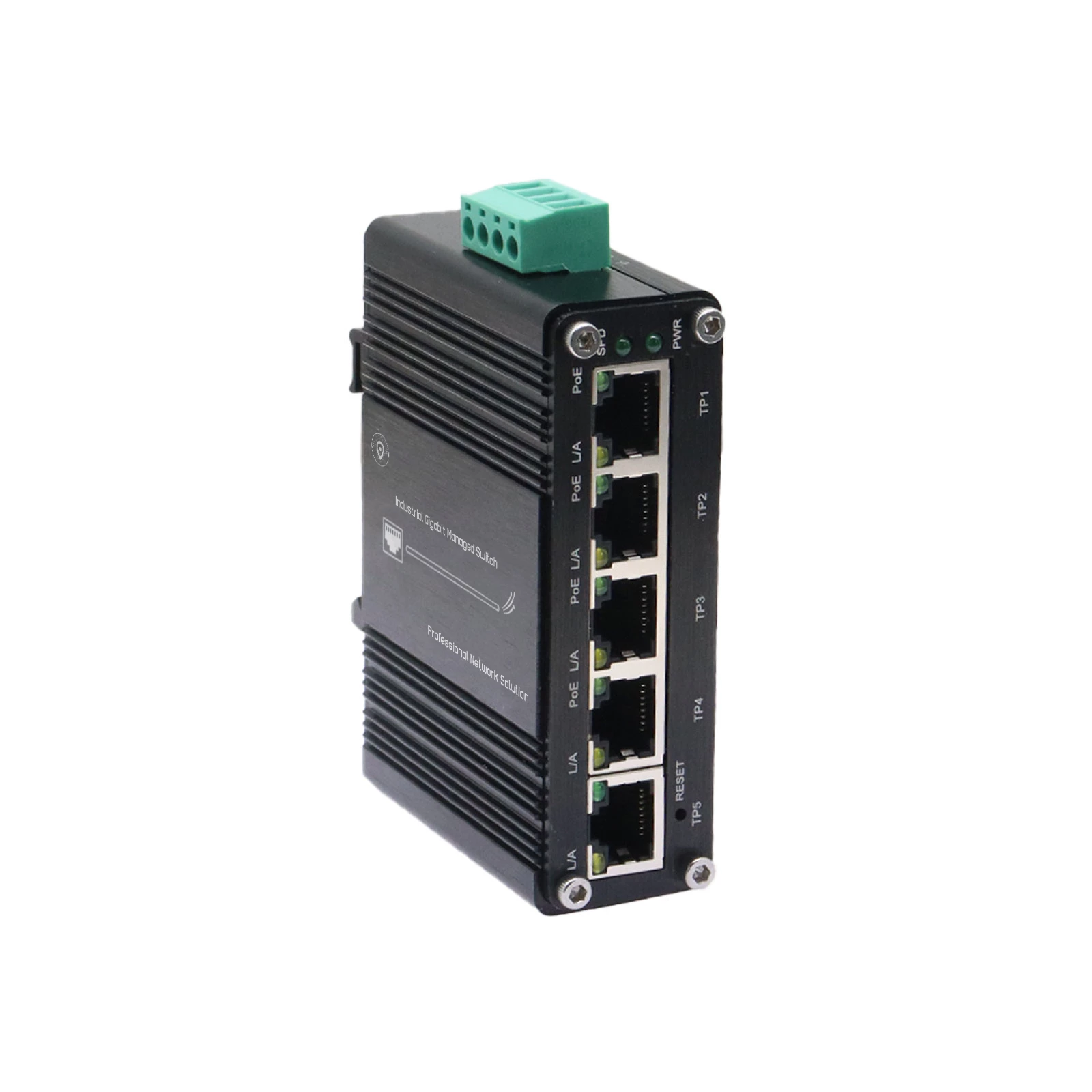
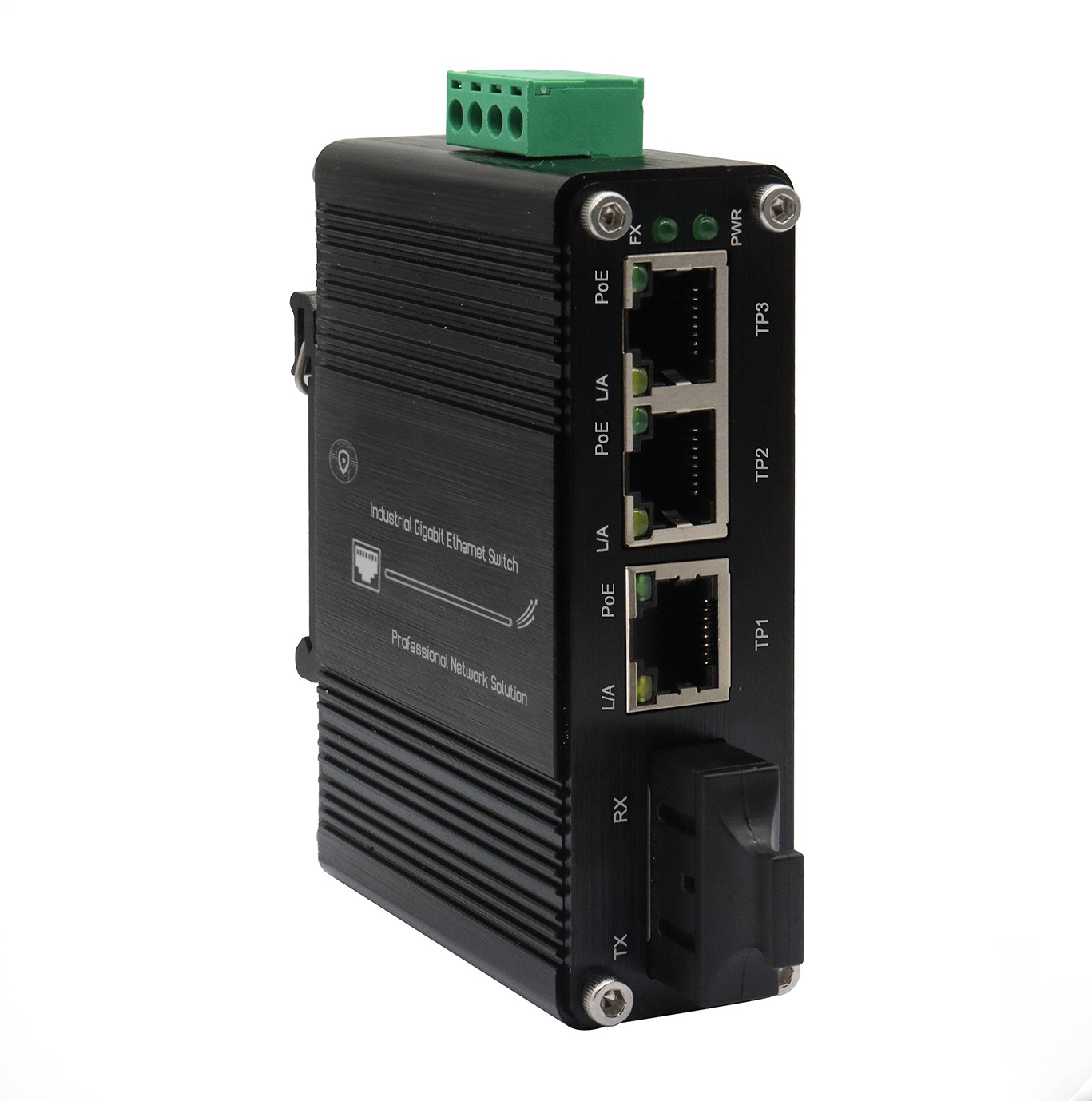
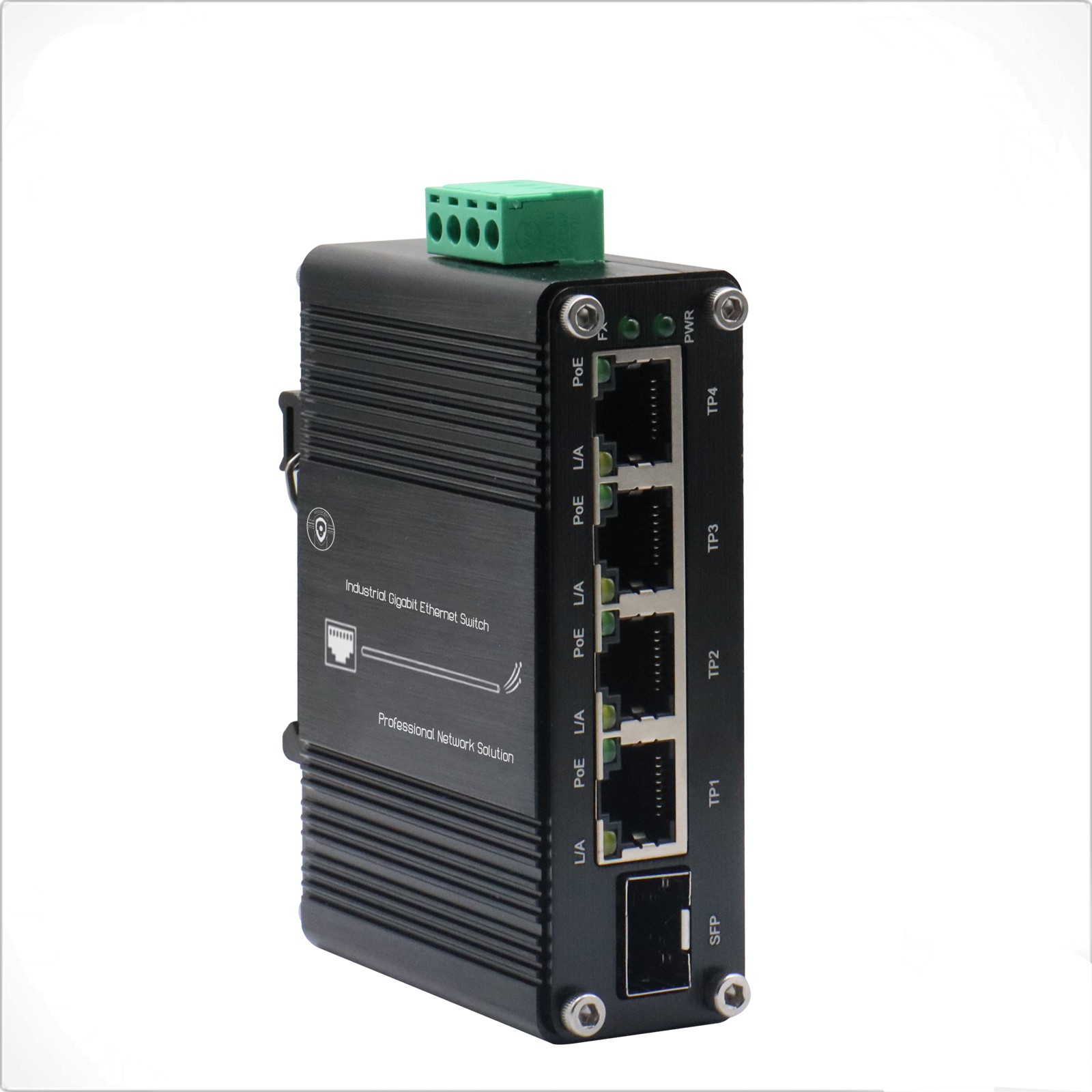
An Industrial PoE (Power over Ethernet) Switch combines the functionality of an Industrial Ethernet Switch with integrated PoE technology.
In addition to transmitting network data, it also delivers electrical power over standard Ethernet cables to compatible devices. This eliminates the need for separate power adapters or additional electrical wiring, making installation faster and more cost-effective.
Industrial PoE Switches comply with IEEE PoE standards such as:
IEEE 802.3af
IEEE 802.3at (PoE+)
IEEE 802.3bt (available on selected high-power models)
Typical Powered Devices
IP Cameras
PTZ Cameras
Wireless Access Points
VoIP Phones
Industrial Sensors
Access Control Systems
IoT Gateways
Environmental Monitoring Equipment
Because a single Ethernet cable carries both data and power, Industrial PoE Switches simplify installation while improving network flexibility.
Core Difference Between Industrial Ethernet Switches and Industrial PoE Switches
The primary difference is straightforward:
Industrial Ethernet Switch → Transmits data only.
Industrial PoE Switch → Transmits both data and electrical power through Ethernet cables.
If your connected devices already have independent power supplies, a standard Industrial Ethernet Switch is usually sufficient. However, if your devices support PoE and you want to reduce wiring complexity, an Industrial PoE Switch is the better choice.
Feature Comparison
| Feature | Industrial Ethernet Switch | Industrial PoE Switch |
|---|---|---|
| Data Transmission | ✔ | ✔ |
| Power Delivery | ✘ | ✔ |
| Ethernet Cable Only | ✘ | ✔ |
| Separate Power Supply Required | ✔ | ✘ (for PoE devices) |
| Installation Cost | Higher | Lower |
| Cable Management | More Complex | Simpler |
| Typical PoE Standards | N/A | IEEE 802.3af / at / bt |
| Ideal for PoE Devices | ✘ | ✔ |
Advantages of an Industrial Ethernet Switch
Industrial Ethernet Switches remain the preferred choice for many automation projects where powered devices already have dedicated electrical supplies.
Advantages
Lower purchase cost
Simple network architecture
No PoE power budget limitations
Suitable for industrial controllers and PLCs
Lower power consumption
Excellent for machine communication networks
Ideal Applications
PLC Networks
Factory Automation
Production Lines
Industrial Control Cabinets
SCADA Systems
Industrial Robotics
Advantages of an Industrial PoE Switch
Industrial PoE Switches are increasingly popular because they simplify deployment while reducing installation costs.
Advantages
Data and power over one cable
Reduced installation time
Lower cabling costs
Easier maintenance
Flexible equipment placement
Cleaner installations
Simplified future expansion
Ideal Applications
IP Surveillance Systems
Smart Buildings
Wireless Networks
Smart Transportation
Access Control
Industrial IoT
Outdoor Monitoring
Which One Should You Choose?
Choose an Industrial Ethernet Switch If:
Your equipment already has separate power supplies.
You are building a PLC or automation network.
Power delivery through Ethernet is unnecessary.
Your priority is data communication between industrial equipment.
Choose an Industrial PoE Switch If:
You need to power IP cameras or wireless access points.
You want to reduce wiring and installation costs.
Devices are installed in locations without convenient power outlets.
You plan to expand your network with additional PoE-powered devices.
Frequently Asked Questions
Is an Industrial PoE Switch also an Ethernet Switch?
Yes. An Industrial PoE Switch performs all the functions of an Industrial Ethernet Switch while also supplying power to compatible devices.
Can I connect non-PoE devices to an Industrial PoE Switch?
Yes. Industrial PoE Switches automatically detect whether a connected device supports PoE and only deliver power when appropriate.
Which switch is more expensive?
Industrial PoE Switches generally cost more because they include integrated PoE power supply hardware. However, they often reduce total project costs by eliminating separate power cables and adapters.
Which switch is better for IP surveillance?
Industrial PoE Switches are the preferred choice for IP camera systems because they provide both power and network connectivity through a single cable
Industrial PoE Switch | Managed PoE Switch | Gigabit PoE Switch | DIN Rail PoE Switch | Industrial Ethernet Switch | Smart Transportation Network | Traffic Monitoring System | Outdoor PoE Switch | PoE for CCTV | Fiber Uplink PoE Switch