简体中文
简体中文 English
- PRODUCTSIndustrial PoE Media Converter Industrial Media Converter Industrial Unmanaged PoE Switch Industrial Managed PoE Switch Industrial Unmanaged Ethernet Switch Industrial Managed Ethernet Switch Industrial PoE Injector Industrial PoE Splitter Industrial PoE Extender DIN-Rail Power Supply Rackmount DIN-Rail BracketHDMI Over Fiber ConverterSDI Over Fiber ConverterSDI Over Fiber Converter 12G-SDI Over Fiber Converter 3G-SDI Over Fiber Converter HD-SDI Over Fiber ConverterDVI Over Fiber ConverterAHD/CVI/TVI Over Fiber
- SOLUTIONS
- Download
- ABOUT
- CONTACT


Selecting the right Industrial PoE Switch is one of the most important decisions when designing an industrial communication network. A properly selected switch ensures stable network performance, reliable power delivery, and long-term system scalability. Choosing the wrong model can result in insufficient bandwidth, inadequate PoE power, network bottlenecks, or unnecessary hardware costs.
Industrial PoE Switches are widely used in factory automation, industrial IoT, transportation, surveillance systems, power utilities, marine communication, and smart city infrastructure. Each application has unique requirements, so understanding the key selection criteria is essential before making a purchasing decision.
This guide explains the most important factors to consider when selecting an Industrial PoE Switch and provides practical recommendations for different industrial applications.
Why Choosing the Right Industrial PoE Switch Matters
Many buyers focus only on price or the number of Ethernet ports. However, an Industrial PoE Switch is designed to operate continuously in demanding environments where network failures can lead to production downtime, safety risks, or increased maintenance costs.
Selecting the appropriate model helps to:
Improve overall network reliability
Reduce installation costs
Simplify cable management
Ensure sufficient PoE power for connected devices
Support future network expansion
Lower long-term maintenance expenses
A well-planned network begins with selecting the right switch for both current and future operational needs.
Step 1: Determine the Number of Ethernet Ports
The first consideration is the number of devices that need to be connected.
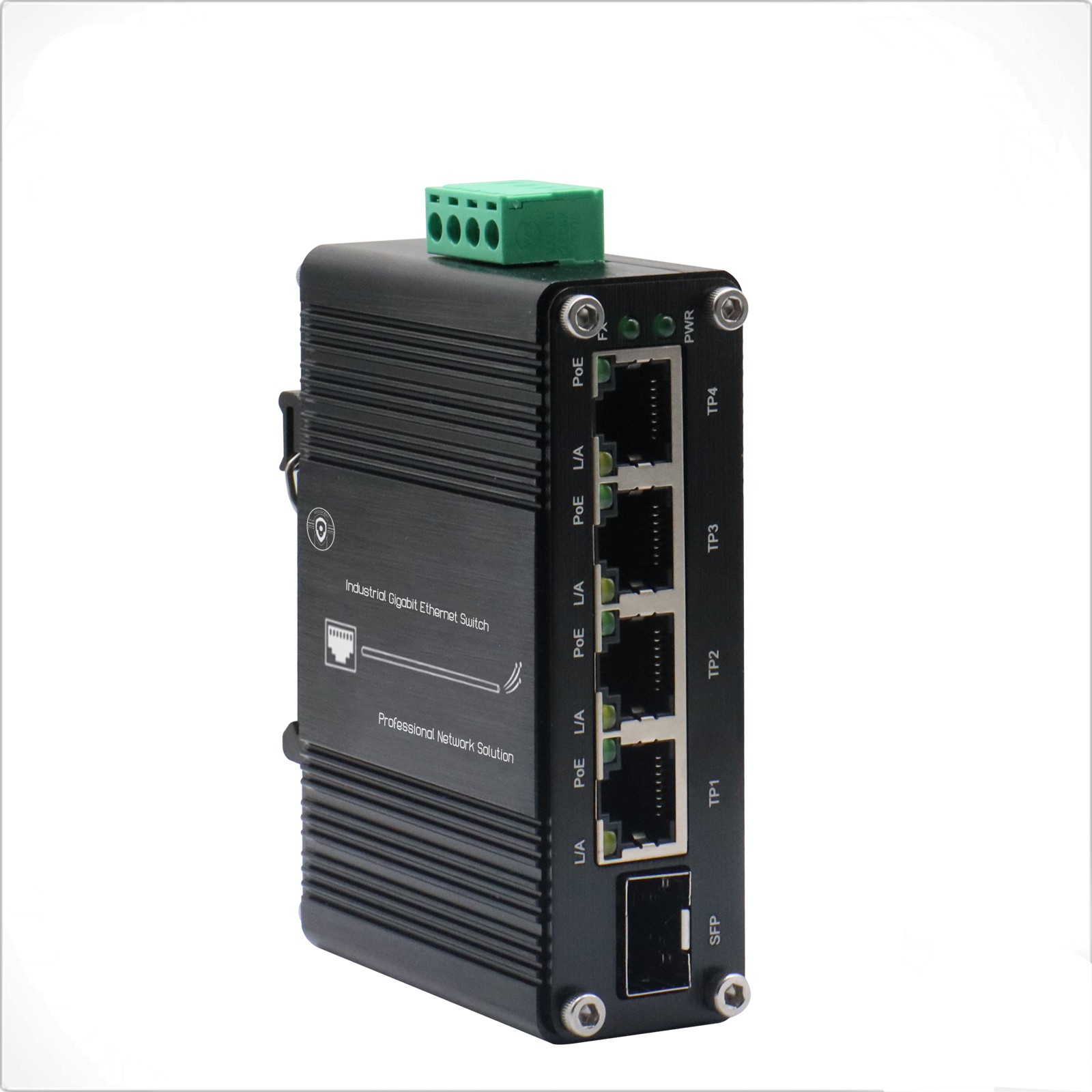
Typical Industrial PoE Switch configurations include:
| Number of Ports | Recommended Application |
|---|---|
| 4-Port PoE Switch | Small surveillance systems, compact control cabinets |
| 5-Port PoE Switch | Small industrial automation projects |
| 8-Port PoE Switch | Medium-sized manufacturing facilities |
| 16-Port PoE Switch | Large surveillance and industrial networks |
| 24-Port PoE Switch | Enterprise and large-scale industrial deployments |
Always leave additional ports available for future expansion instead of selecting a switch that exactly matches your current device count.
Step 2: Calculate the Required PoE Power Budget
The total PoE power budget is one of the most critical specifications.
Every powered device consumes a different amount of power.
Typical examples include:
| Device | Typical Power Consumption |
|---|---|
| Standard IP Camera | 6–12W |
| PTZ Camera | 20–30W |
| Wireless Access Point | 10–25W |
| VoIP Phone | 5–10W |
| Industrial Sensor | 3–8W |
For example, if eight IP cameras each require 15W, the switch should provide at least:
8 × 15W = 120W PoE Budget
To maintain stable operation and allow for future upgrades, it is recommended to reserve an additional 20–30% of power capacity.
Step 3: Choose the Appropriate PoE Standard
Industrial PoE Switches support different IEEE Power over Ethernet standards.
| Standard | Maximum Power Per Port | Typical Devices |
|---|---|---|
| IEEE 802.3af | 15.4W | Basic IP Cameras, VoIP Phones |
| IEEE 802.3at (PoE+) | 30W | PTZ Cameras, Wireless APs |
| IEEE 802.3bt | 60W–90W | High-power Industrial Equipment |
Choosing the appropriate standard ensures compatibility with both current and future powered devices.
Step 4: Select Managed or Unmanaged
Another important decision is whether to choose a managed or unmanaged Industrial PoE Switch.
Unmanaged Industrial PoE Switch
Recommended for:
Small surveillance projects
Warehouses
Remote monitoring stations
Simple production lines
Advantages:
Plug-and-play installation
Lower investment cost
Easy deployment
Minimal maintenance
Managed Industrial PoE Switch
Recommended for:
Factory automation
Industrial IoT
Smart transportation
Utility networks
Enterprise industrial systems
Advanced functions include:
VLAN
QoS
SNMP
RSTP
Link Aggregation
Remote Management
Network Diagnostics
Managed switches provide greater flexibility and improved network control for complex industrial environments.
Step 5: Consider Environmental Conditions
Industrial networking equipment must withstand challenging operating environments.
When selecting a switch, evaluate:
Operating temperature
Humidity
Dust exposure
Vibration
Electromagnetic interference (EMI)
Installation location (indoor or outdoor)
A high-quality Industrial PoE Switch typically features:
Wide operating temperature (-40°C to +75°C)
Fanless cooling
Industrial-grade aluminum housing
High EMC protection
Dual redundant power inputs
These features ensure long-term reliability even in harsh industrial environments.
Step 6: Determine Whether Fiber Uplink Ports Are Required
Many industrial communication networks extend far beyond the 100-meter limitation of standard Ethernet cables. In these situations, Industrial PoE Switches equipped with SFP fiber uplink ports provide a more reliable and scalable solution.
Fiber uplinks offer several advantages:
Long-distance transmission over several kilometers
Immunity to electromagnetic interference (EMI)
Higher network stability
Greater bandwidth for backbone connections
Easier network expansion
Industrial environments that commonly require fiber uplinks include:
Manufacturing plants
Railway communication systems
Power substations
Campus networks
Smart transportation
Mining operations
If your project involves multiple buildings, outdoor installations, or long cable runs, selecting a switch with one or more Gigabit SFP slots is highly recommended.
Step 7: Evaluate Network Bandwidth Requirements
Bandwidth requirements vary depending on the connected devices and applications.
Typical recommendations include:
| Application | Recommended Speed |
|---|---|
| Basic Sensors | 100Mbps |
| PLC Communication | Gigabit |
| HD IP Cameras | Gigabit |
| 4K Video Surveillance | Gigabit + Fiber Uplink |
| Industrial IoT | Gigabit |
| Machine Vision | Gigabit or Higher |
Selecting a Gigabit Industrial PoE Switch provides better long-term scalability than Fast Ethernet models.
Step 8: Choose the Appropriate Power Input
Industrial PoE Switches generally support DC power input rather than standard AC adapters.
Common input voltages include:
12V DC
24V DC
48V DC
Many industrial applications use dual redundant power inputs, allowing two independent power supplies to be connected simultaneously.
Benefits include:
Reduced downtime
Improved reliability
Backup power protection
Easier maintenance
For mission-critical industrial networks, redundant power input should be considered a standard requirement.
Step 9: Verify International Certifications
Industrial networking equipment should comply with internationally recognized certifications to ensure safety, reliability, and market acceptance.
Look for products certified to:
CE
FCC
RoHS
UKCA (when applicable)
Manufacturers operating under ISO 9001 quality management systems typically maintain more consistent production quality and quality control processes.
Step 10: Select a Reliable Manufacturer
Choosing the right manufacturer is just as important as selecting the right switch.
A professional Industrial PoE Switch manufacturer should provide:
Stable production capacity
Strict quality control
Technical support
OEM & ODM services
Custom branding
Fast delivery
Long-term product availability
Working with an experienced manufacturer helps reduce project risk and ensures consistent product quality for future orders.
Recommended Industrial PoE Switch Selection by Application
Factory Automation
Recommended Features:
Managed switch
Gigabit Ethernet
Dual power input
VLAN
QoS
Wide temperature
Security Surveillance
Recommended Features:
High PoE power budget
Gigabit ports
SFP uplink
Plug-and-play (small projects)
Managed switch (large projects)
Smart Transportation
Recommended Features:
Fiber uplink
Wide temperature
High EMC protection
Redundant power
Industrial enclosure
Power Utilities
Recommended Features:
Managed switch
Industrial EMC protection
Fiber communication
Redundant power
Long-term stability
Industrial IoT
Recommended Features:
Gigabit connectivity
Remote management
SNMP
Industrial design
High reliability
Marine & Offshore
Recommended Features:
Corrosion-resistant housing
Fanless cooling
Wide operating temperature
Stable power input
Fiber uplink support
Common Mistakes When Buying an Industrial PoE Switch
Many buyers focus only on the initial purchase price, overlooking specifications that directly impact long-term performance.
Common mistakes include:
Buying Too Few Ports
Always allow room for future expansion instead of selecting a switch with exactly the required number of ports.
Ignoring the PoE Budget
The total PoE power budget should exceed the combined power requirements of all connected devices.
Choosing Commercial Equipment for Industrial Applications
Commercial switches are not designed for harsh environments and may experience premature failures in industrial settings.
Overlooking Future Network Growth
Consider future requirements such as additional cameras, sensors, access points, or production equipment when selecting a switch.
Choosing Price Over Quality
Reliable industrial communication systems depend on stable hardware. Investing in higher-quality equipment often reduces maintenance costs and downtime over the product's lifespan.
Frequently Asked Questions
How many PoE ports do I need?
Choose enough ports for your current devices while reserving additional capacity for future expansion.
What is a PoE power budget?
The PoE power budget is the maximum amount of electrical power that the switch can supply to connected PoE devices.
Should I choose a managed or unmanaged switch?
For simple installations, unmanaged switches are usually sufficient. For larger or more complex industrial networks, managed switches provide greater flexibility and control.
Do I need Gigabit Ethernet?
Gigabit Ethernet is recommended for most modern industrial networks, particularly those supporting IP surveillance, Industrial IoT, or automation systems.
When should I choose fiber uplinks?
Fiber uplinks are recommended whenever transmission distances exceed 100 meters or when improved immunity to electromagnetic interference is required.
Why are dual power inputs important?
They provide redundancy by allowing the switch to continue operating if one power source fails.
Can Industrial PoE Switches be used outdoors?
Yes, when installed inside suitable weatherproof or industrial control enclosures.
What certifications should I look for?
CE, FCC, and RoHS are the most common certifications for international industrial networking products.
Can Industrial PoE Switches power IP cameras?
Yes. Most Industrial PoE Switches are specifically designed to power IP cameras, wireless access points, VoIP phones, and other IEEE-compliant PoE devices.
Should I choose an OEM manufacturer?
Working directly with an experienced OEM & ODM manufacturer can provide better customization options, more competitive pricing, and stronger technical support for long-term projects.
Industrial PoE Switch | Managed PoE Switch | Gigabit PoE Switch | DIN Rail PoE Switch | Industrial Ethernet Switch | Smart Transportation Network | Traffic Monitoring System | Outdoor PoE Switch | PoE for CCTV | Fiber Uplink PoE Switch