简体中文
简体中文 English
- PRODUCTSIndustrial PoE Media Converter Industrial Media Converter Industrial Unmanaged PoE Switch Industrial Managed PoE Switch Industrial Unmanaged Ethernet Switch Industrial Managed Ethernet Switch Industrial PoE Injector Industrial PoE Splitter Industrial PoE Extender DIN-Rail Power Supply Rackmount DIN-Rail BracketHDMI Over Fiber ConverterSDI Over Fiber ConverterSDI Over Fiber Converter 12G-SDI Over Fiber Converter 3G-SDI Over Fiber Converter HD-SDI Over Fiber ConverterDVI Over Fiber ConverterAHD/CVI/TVI Over Fiber
- SOLUTIONS
- Download
- ABOUT
- CONTACT


When designing a business or industrial network, one of the most common questions is whether to choose a Layer 2 switch or a Layer 3 switch. Both devices play an essential role in connecting network devices, but they serve different purposes and offer different capabilities.
For small local networks, a Layer 2 switch may provide everything you need. However, as networks grow larger and require communication between multiple VLANs or remote locations, a Layer 3 switch becomes the better solution.
In this guide, we'll explain the differences between Layer 2 and Layer 3 switches, compare their features, and help you determine which one is right for your network.
What Is a Layer 2 Switch?
A Layer 2 switch operates at the Data Link Layer (Layer 2) of the OSI model. It forwards Ethernet frames based on MAC (Media Access Control) addresses, allowing devices within the same local network or VLAN to communicate efficiently.
Layer 2 switches learn the MAC addresses of connected devices and build a forwarding table to send traffic only to the correct destination port. This process improves network efficiency and reduces unnecessary traffic.
Typical Layer 2 features include:
MAC Address Learning
VLAN Support
STP (Spanning Tree Protocol)
RSTP and MSTP
Link Aggregation (LACP)
QoS (Quality of Service)
Port Mirroring
IGMP Snooping
Layer 2 switches are ideal for access-layer networking where routing between different IP networks is not required.
What Is a Layer 3 Switch?
A Layer 3 switch combines the high-speed switching capabilities of a Layer 2 switch with the routing functions typically associated with a router.
In addition to forwarding traffic based on MAC addresses, a Layer 3 switch can make forwarding decisions using IP addresses, enabling communication between different VLANs and subnets.
Many Layer 3 switches support advanced routing features such as:
Static Routing
RIP (Routing Information Protocol)
OSPF (Open Shortest Path First)
Inter-VLAN Routing
Access Control Lists (ACL)
Policy-Based Routing (on supported models)
DHCP Relay
Route Redundancy
This makes Layer 3 switches suitable for medium and large networks that require efficient traffic routing without relying on an external router for internal communication.
Layer 2 vs. Layer 3 Switch: Key Differences
| Feature | Layer 2 Switch | Layer 3 Switch |
|---|---|---|
| OSI Layer | Layer 2 (Data Link) | Layer 2 + Layer 3 |
| Forwarding Method | MAC Address | MAC Address + IP Address |
| Routing Capability | No | Yes |
| Inter-VLAN Routing | No | Yes |
| Static Routing | No | Yes |
| Dynamic Routing | No | Yes (on supported models) |
| VLAN Support | Yes | Yes |
| Network Segmentation | Yes | Yes |
| Performance | High-speed switching | High-speed switching with routing |
| Configuration Complexity | Lower | Higher |
| Typical Cost | Lower | Higher |
The biggest difference is that a Layer 3 switch can route traffic between different networks, while a Layer 2 switch cannot.
When Should You Choose a Layer 2 Switch?
A Layer 2 switch is the right choice when your network mainly connects devices within the same subnet or VLAN and does not require routing.
Common applications include:
Small Business Networks
Provide reliable connectivity for computers, printers, and network storage without the need for advanced routing.
CCTV Surveillance Systems
Connect IP cameras and network video recorders (NVRs) within a single surveillance network.
Industrial Control Cabinets
Support communication between PLCs, HMIs, sensors, and industrial controllers in localized automation systems.
Edge Access Networks
Connect end devices to the network while forwarding traffic to aggregation or core switches.
For these applications, a Layer 2 switch offers excellent performance, lower cost, and simpler management.
When Should You Choose a Layer 3 Switch?
A Layer 3 switch is recommended when your network requires communication between multiple VLANs, higher scalability, or advanced traffic management.
Typical applications include:
Large Manufacturing Facilities
Separate production lines, office systems, and management networks while allowing secure communication between them.
Enterprise Campus Networks
Connect multiple departments and buildings with efficient internal routing and centralized management.
Smart City Infrastructure
Support traffic monitoring, public security, environmental monitoring, and municipal communication systems.
Transportation Systems
Provide reliable communication for railway stations, airports, highways, and metro networks where multiple network segments must interact.
Industrial Automation
Enable communication between different production areas while maintaining network segmentation for security and performance.
Data Centers
Improve internal traffic efficiency and reduce latency by performing routing directly within the switching infrastructure.
Can a Layer 3 Switch Replace a Router?
In many enterprise and industrial networks, a Layer 3 switch can replace a router for internal routing between VLANs and subnets.
However, routers are still required for functions such as:
Internet connectivity
WAN connections
VPN services
NAT (Network Address Translation)
Advanced firewall functions
Many organizations use Layer 3 switches for high-speed internal routing while relying on routers for external network access.
How to Choose the Right Switch
Before selecting a switch, consider the following factors.
Network Size
Small networks with limited segmentation generally work well with Layer 2 switches.
Larger networks with multiple departments or production areas benefit from Layer 3 routing.
VLAN Requirements
If devices only communicate within the same VLAN, a Layer 2 switch is usually sufficient.
If communication between VLANs is required, choose a Layer 3 switch.
Routing Requirements
Networks that require static routes or dynamic routing protocols should use a Layer 3 switch.
Future Expansion
If your business expects network growth, investing in a Layer 3 switch today can simplify future upgrades.
Budget
Layer 2 switches offer a lower initial investment.
Layer 3 switches cost more but provide greater flexibility and reduce the need for additional routing equipment.
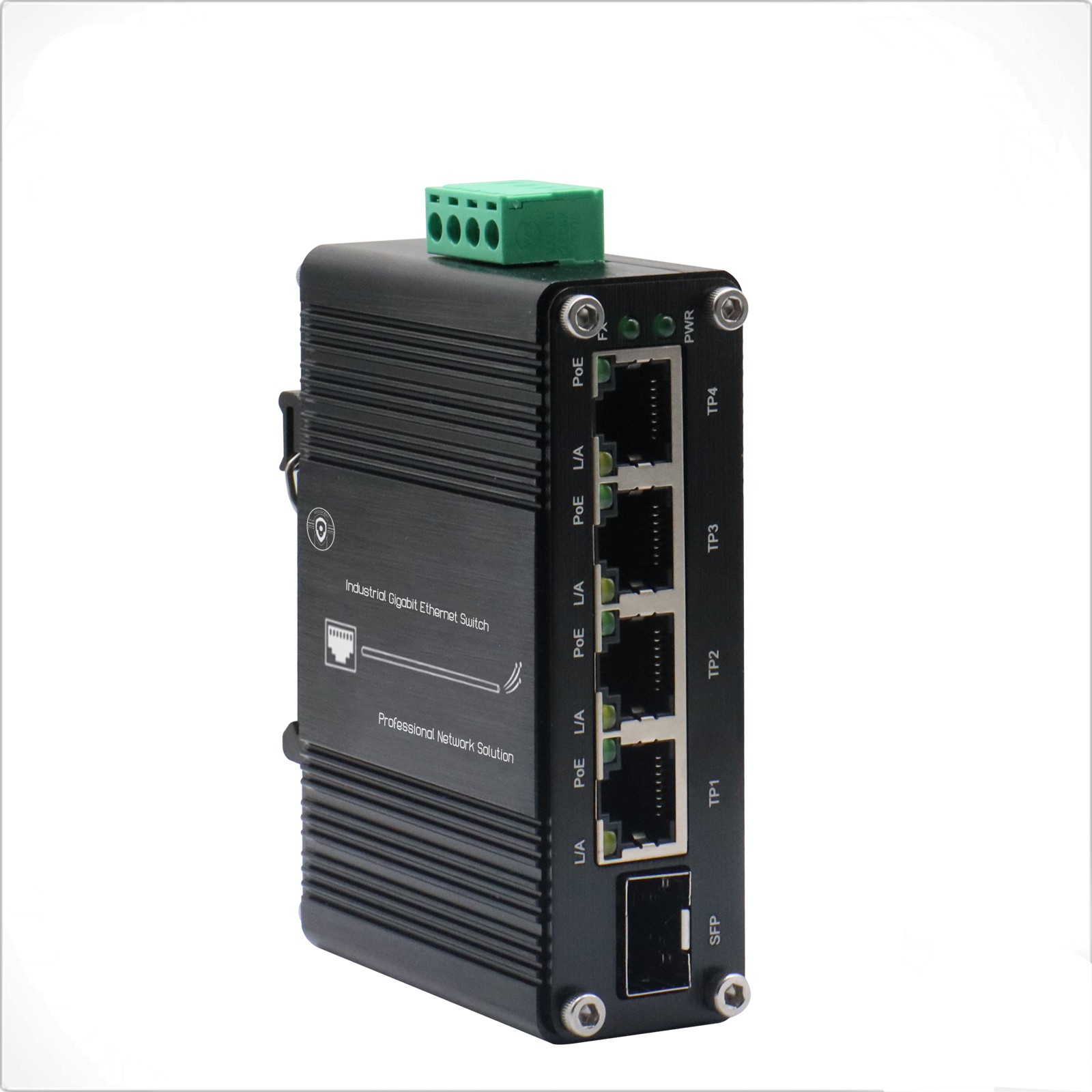
Why Choose WXA Layer 2 and Layer 3 Industrial Switches?
WXA offers a complete range of industrial Ethernet switches for industrial automation, surveillance, transportation, and enterprise networking.
Our advantages include:
Layer 2, Layer 2+, and Layer 3 industrial switch solutions
Managed and unmanaged product lines
Gigabit and 10G SFP+ uplink options
Support for advanced features such as VLAN, QoS, SNMP, ERPS, RIP, and OSPF (on supported models)
Wide operating temperature from -40°C to +75°C
Fanless industrial-grade design
Dual redundant power inputs
CE, FCC, and RoHS certified products
OEM and ODM customization services
Fast production and global delivery
Professional technical support
Five-year warranty for industrial switch series
Our switches are widely used in manufacturing, energy, transportation, smart city, and industrial communication projects worldwide.
Frequently Asked Questions
Is a Layer 3 switch better than a Layer 2 switch?
Not necessarily. A Layer 3 switch is better for networks that require routing between VLANs or subnets, while a Layer 2 switch is often the most practical and cost-effective choice for smaller or simpler networks.
Can a Layer 3 switch replace a router?
A Layer 3 switch can handle internal routing between VLANs and IP networks. However, routers are still needed for Internet access, WAN connectivity, VPNs, NAT, and advanced security functions.
Do I need a Layer 3 switch to use VLANs?
No. Layer 2 switches can create and manage VLANs. However, communication between VLANs requires a Layer 3 switch or a router.
What industries commonly use Layer 3 switches?
Layer 3 switches are widely used in manufacturing, transportation, smart cities, energy, enterprise campuses, healthcare, education, and data centers where multiple network segments require efficient routing.
Is a Layer 3 switch more expensive?
Generally, yes. Layer 3 switches have more powerful hardware and advanced routing capabilities, resulting in a higher purchase cost. For many growing organizations, the additional functionality can provide better long-term value.
Industrial PoE Switch | Managed PoE Switch | Gigabit PoE Switch | DIN Rail PoE Switch | Industrial Ethernet Switch | Smart Transportation Network | Traffic Monitoring System | Outdoor PoE Switch | PoE for CCTV | Fiber Uplink PoE Switch