简体中文
简体中文 English
- PRODUCTSIndustrial PoE Media Converter Industrial Media Converter Industrial Unmanaged PoE Switch Industrial Managed PoE Switch Industrial Unmanaged Ethernet Switch Industrial Managed Ethernet Switch Industrial PoE Injector Industrial PoE Splitter Industrial PoE Extender DIN-Rail Power Supply Rackmount DIN-Rail BracketHDMI Over Fiber ConverterSDI Over Fiber ConverterSDI Over Fiber Converter 12G-SDI Over Fiber Converter 3G-SDI Over Fiber Converter HD-SDI Over Fiber ConverterDVI Over Fiber ConverterAHD/CVI/TVI Over Fiber
- SOLUTIONS
- Download
- ABOUT
- CONTACT


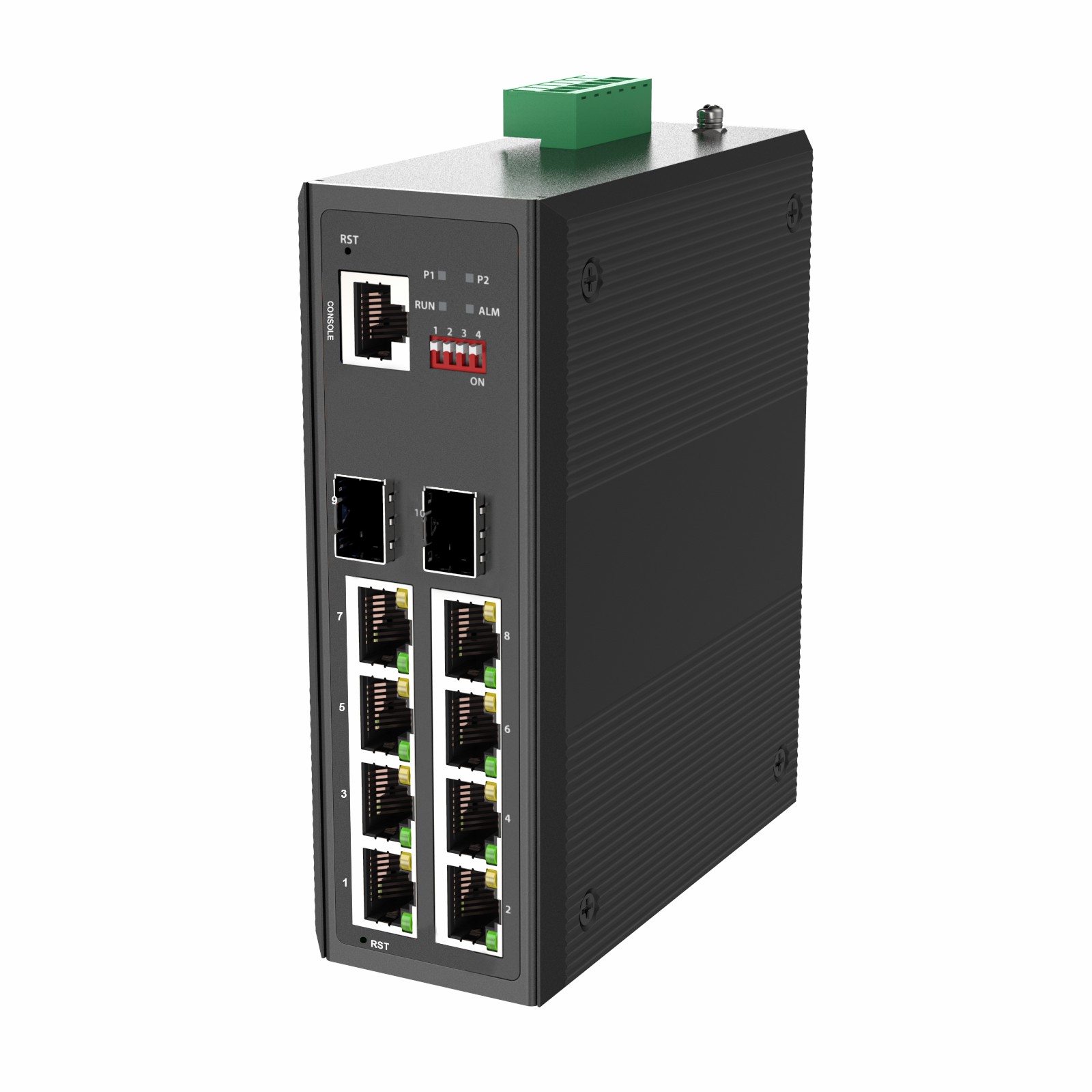
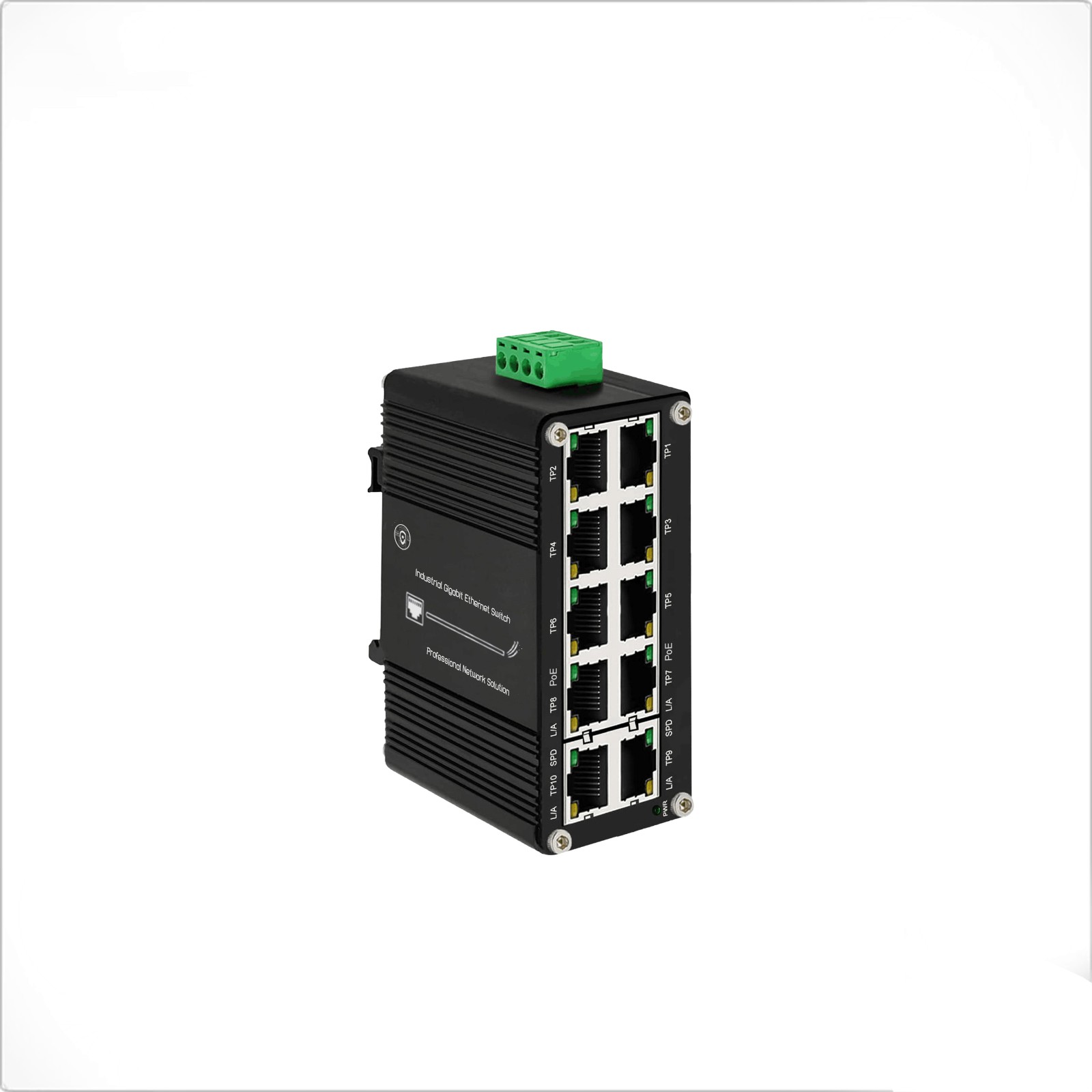
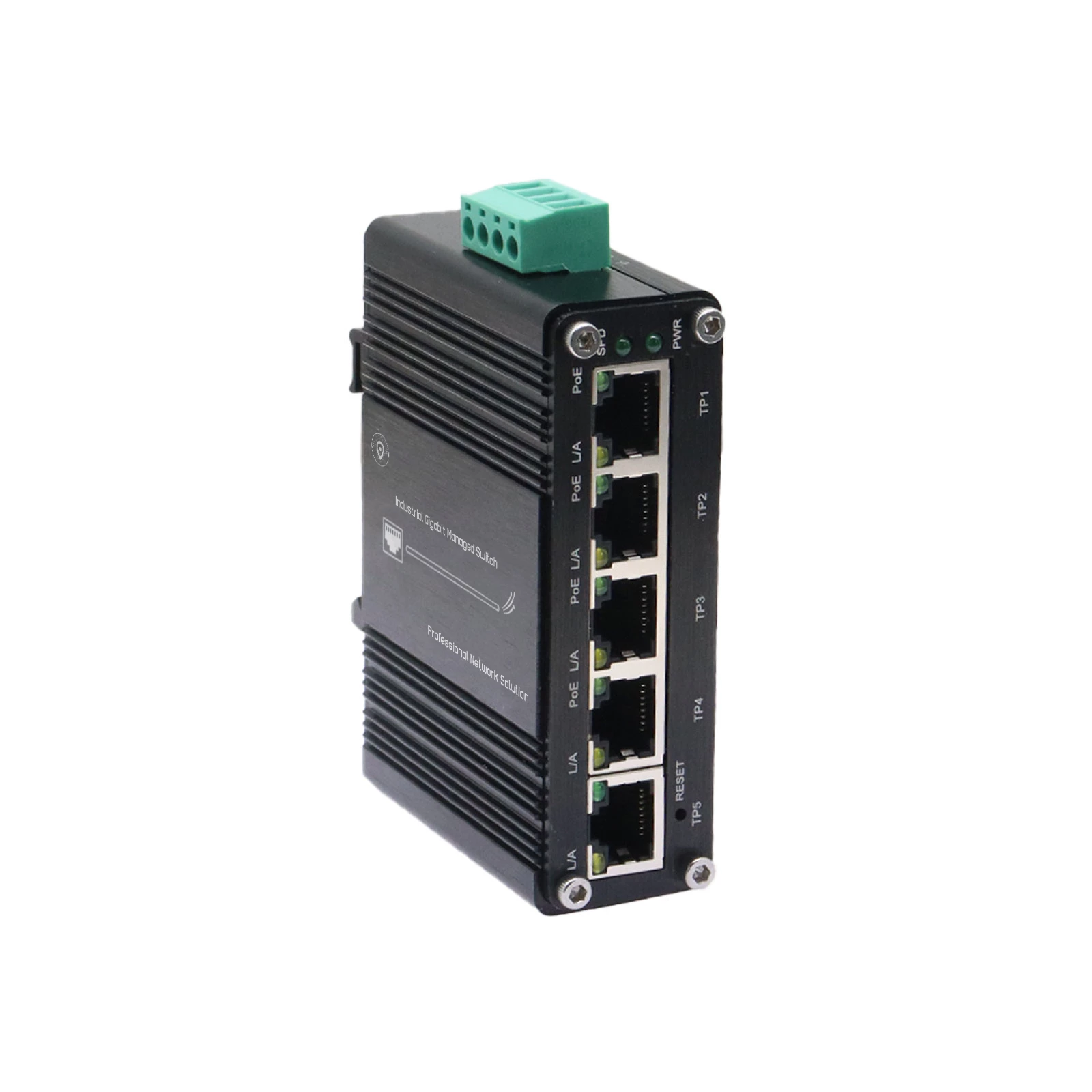
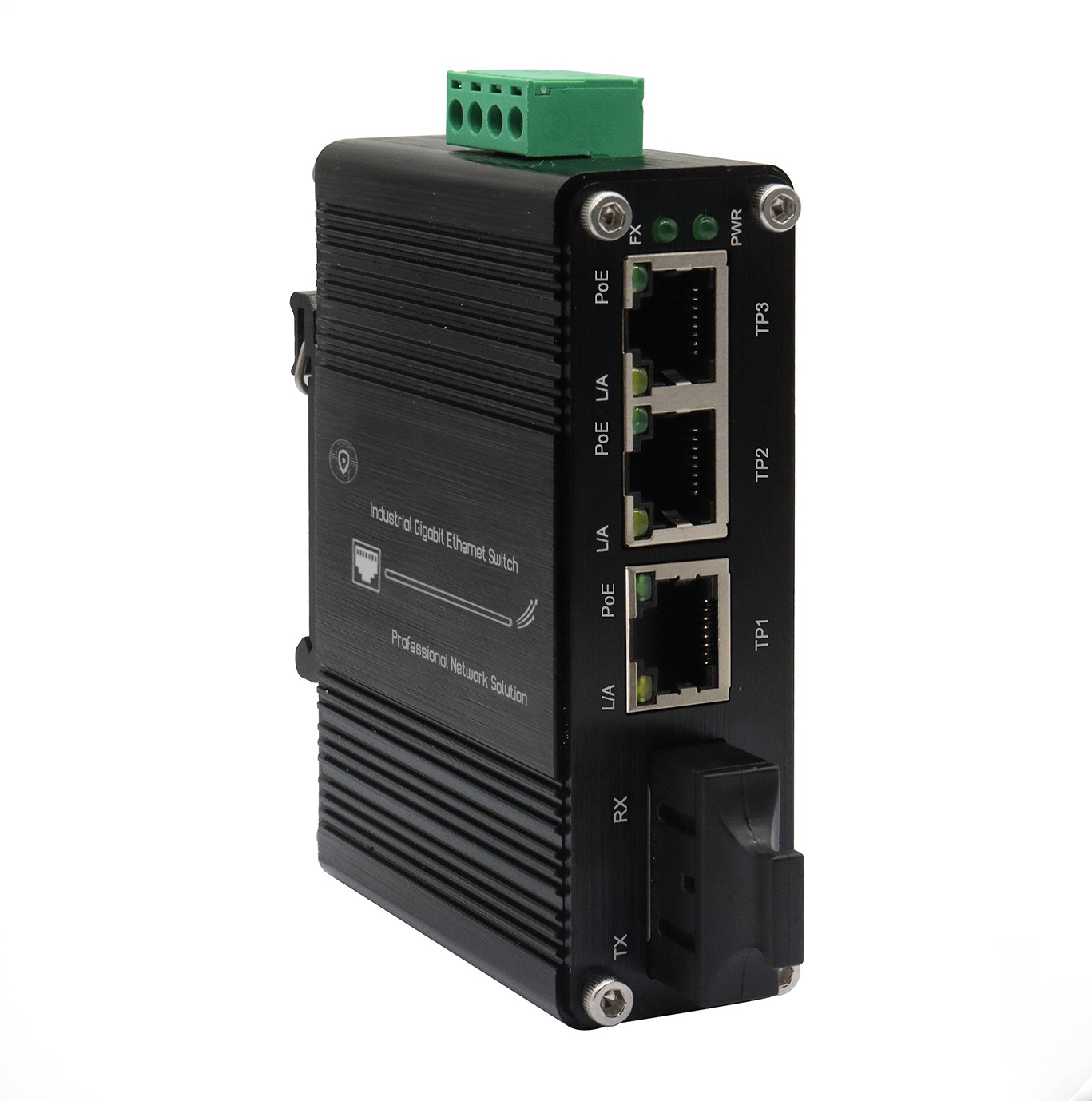
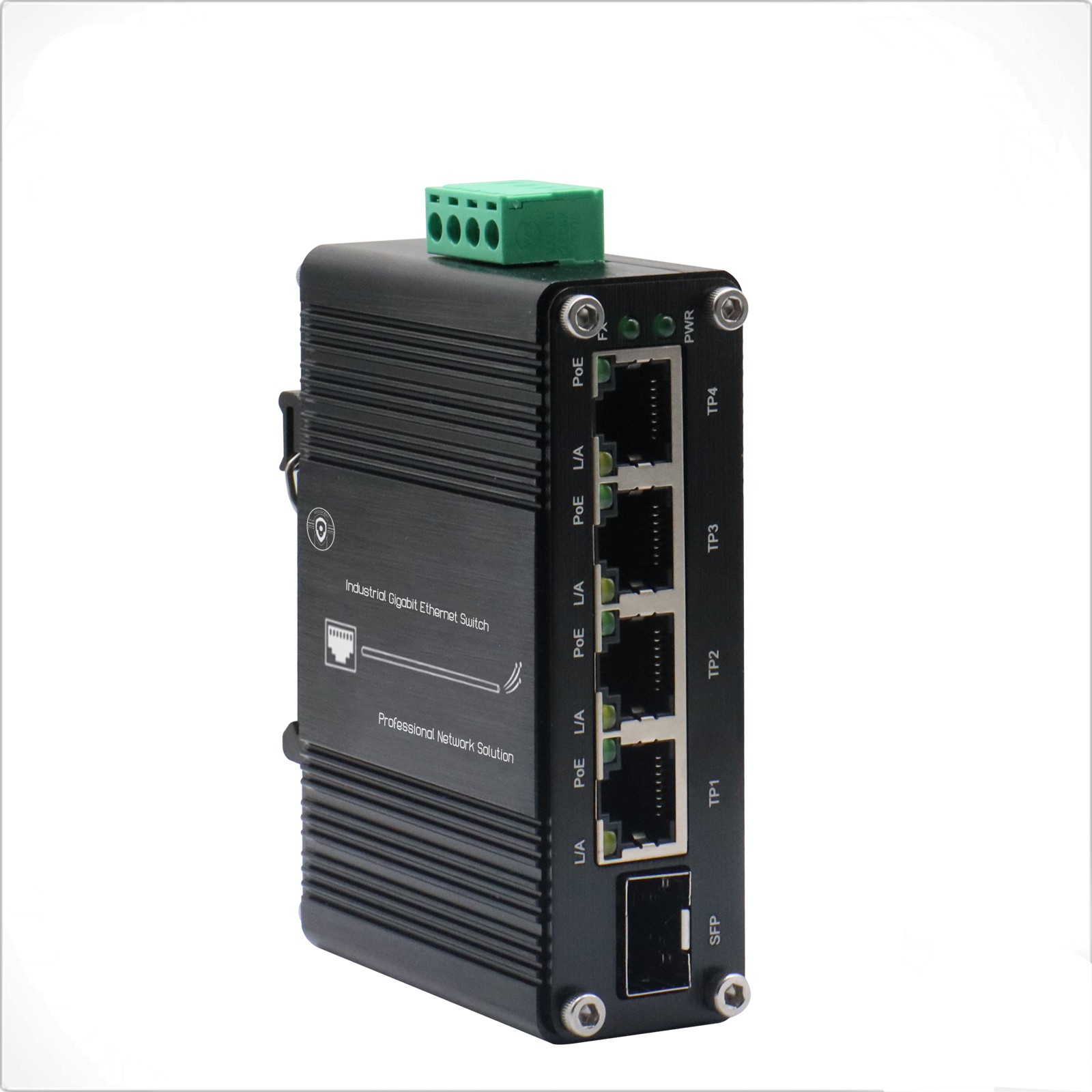
What Is an Industrial PoE Switch?
An Industrial PoE Switch is a network device that combines Ethernet switching with Power over Ethernet (PoE) technology, allowing both electrical power and data to be transmitted through a single Ethernet cable.
Instead of installing separate power supplies for each IP camera, wireless access point, VoIP phone, or industrial IoT device, an industrial PoE switch provides centralized power distribution while maintaining reliable network communication.
Compared with commercial switches, industrial PoE switches are built to operate continuously in demanding industrial environments. They typically feature:
Wide operating temperature ranges (commonly -40°C to +75°C)
Fanless aluminum housing for efficient heat dissipation
Dual redundant DC power inputs
High EMC and EMI immunity
Surge and lightning protection
DIN-rail and wall-mount installation options
Industrial-grade components designed for 24/7 operation
These features make industrial PoE switches ideal for mission-critical applications where network downtime is unacceptable.
How Does PoE Work?
Power over Ethernet follows IEEE standards that define how electrical power is safely delivered over twisted-pair Ethernet cables without affecting data transmission.
A PoE switch automatically detects whether a connected device supports PoE before supplying power. This intelligent negotiation prevents damage to non-PoE equipment while simplifying installation.
The same Ethernet cable simultaneously carries:
Network data
DC power
Device communication
This significantly reduces cable installation, maintenance costs, and equipment complexity.
Main Benefits of Industrial PoE Switches
Simplified Installation
Only one Ethernet cable is required for both power and data, reducing wiring complexity and installation time.
Lower Infrastructure Costs
No separate AC power outlet is needed near each IP camera, lowering labor and material expenses.
Centralized Power Management
All connected cameras receive power from one switch, making maintenance and troubleshooting much easier.
High Reliability
Industrial PoE switches are designed for uninterrupted 24/7 operation in harsh environments.
Flexible Deployment
DIN-rail mounting, wall mounting, and wide DC input voltage allow installation in control cabinets, roadside cabinets, outdoor enclosures, and industrial facilities.
Why Industrial PoE Switches Are Becoming the Industry Standard
As surveillance systems continue to expand in size and complexity, commercial networking equipment often struggles to meet industrial requirements. Factors such as fluctuating temperatures, electrical interference, vibration, and long operating hours can quickly expose the limitations of consumer-grade switches.
Industrial PoE switches are specifically engineered to address these challenges. Their rugged design, high-power PoE capabilities, and long service life make them the preferred choice for engineers, system integrators, and project contractors responsible for critical infrastructure.
Whether deploying surveillance systems in factories, transportation networks, smart cities, energy facilities, or remote outdoor locations, selecting the right industrial PoE switch is one of the most important decisions for ensuring long-term network stability and reducing maintenance costs.
Why IP Camera Systems Need Industrial PoE Switches
As surveillance technology continues to advance, IP cameras have become the preferred choice for commercial, industrial, and government security projects. Compared with traditional analog CCTV systems, IP cameras provide higher image quality, intelligent video analytics, remote management, and greater scalability.
However, these advantages also place higher demands on the network infrastructure.
Many installers assume that any PoE switch can power IP cameras. In reality, choosing the wrong switch can lead to unstable video streams, unexpected reboots, power shortages, and expensive maintenance.
For industrial environments, selecting an industrial-grade PoE switch is essential to ensure long-term reliability.
What Makes Industrial Surveillance Different?
Unlike office networks, industrial surveillance systems operate under much harsher conditions.
Typical deployment environments include:
Manufacturing plants
Warehouses
Railways
Highways
Airports
Ports
Mining sites
Oil & Gas facilities
Solar farms
Wind power stations
Smart city infrastructure
Outdoor security cabinets
These locations expose networking equipment to extreme temperatures, dust, humidity, vibration, electrical interference, and unstable power supplies.
A commercial switch designed for office use is simply not built for these conditions.
Common Problems When Using Commercial PoE Switches
Many surveillance projects initially use commercial Ethernet switches because of their lower purchase price.
However, system integrators often encounter problems after deployment.
1. Overheating
Commercial switches are usually designed for indoor environments between 0°C and 40°C.
When installed inside outdoor cabinets or factory workshops, temperatures can easily exceed 60°C, causing:
Frequent restarts
Network instability
Reduced lifespan
Permanent hardware damage
Industrial PoE switches are typically rated for -40°C to +75°C, ensuring stable performance year-round.
2. Insufficient PoE Power
A common mistake is focusing only on the number of ports.
For example:
A 16-port PoE switch may advertise:
16 PoE ports
But only provide:
120W total PoE budget
If each IP camera requires 15W:
16 × 15W = 240W
The switch cannot supply enough power.
As a result:
Cameras randomly restart.
PTZ cameras stop moving.
Night vision becomes unstable.
Some ports stop supplying power.
Industrial PoE switches are available with larger power budgets, such as:
120W
240W
360W
480W
720W
allowing reliable operation for high-power devices.
3. Electrical Interference (EMI)
Factories contain numerous sources of electromagnetic interference:
Motors
Variable Frequency Drives (VFD)
Welding equipment
High-voltage machinery
Elevators
These devices generate electromagnetic noise that can disrupt commercial networking equipment.
Industrial PoE switches feature enhanced EMC/EMI protection to maintain stable communication in electrically noisy environments.
4. Power Fluctuations
Industrial sites often experience:
Voltage spikes
Voltage drops
Lightning surges
Generator switching
Consumer-grade switches are vulnerable to these conditions.
Industrial PoE switches typically include:
Wide DC voltage input
Dual redundant power inputs
Surge protection
Reverse polarity protection
Overcurrent protection
These features significantly improve system reliability.
5. Long Operating Hours
Unlike office networks that operate mainly during business hours, surveillance systems work:
24 hours a day
365 days a year
Even a few minutes of downtime may result in:
Security blind spots
Lost video evidence
Production interruptions
Increased maintenance costs
Industrial switches are specifically engineered for continuous operation.
Commercial PoE Switch vs Industrial PoE Switch
| Feature | Commercial PoE Switch | Industrial PoE Switch |
|---|---|---|
| Operating Temperature | 0°C to 40°C | -40°C to +75°C |
| Housing | Plastic or standard metal | Rugged aluminum housing |
| Cooling | Cooling fan | Fanless design |
| Power Input | AC Adapter | Wide DC input with redundancy |
| EMC Protection | Basic | Industrial-grade EMC/EMI |
| Surge Protection | Limited | Enhanced surge protection |
| Mounting | Desktop | DIN Rail & Wall Mount |
| Lifespan | Office applications | 24/7 industrial operation |
| Applications | Offices, homes | Factories, transportation, utilities, outdoor projects |
Although industrial switches generally have a higher initial cost, they often reduce total ownership costs by minimizing downtime, maintenance, and equipment replacement.
Typical Industrial IP Camera Applications
Smart Manufacturing
Factories require real-time surveillance for:
Production lines
Robotic systems
Quality inspection
Warehouse logistics
Industrial PoE switches provide reliable connectivity despite vibration and electromagnetic interference.
Intelligent Transportation Systems (ITS)
Transportation projects require stable networking for:
Traffic cameras
Highway monitoring
Tunnel surveillance
Railway stations
Metro systems
Industrial switches support continuous operation in outdoor cabinets exposed to heat, rain, and dust.
Smart Cities
Modern smart city deployments include:
Public security cameras
License plate recognition (LPR)
AI-powered video analytics
Public Wi-Fi
Environmental monitoring
High-power PoE and fiber uplinks enable scalable city-wide surveillance networks.
Oil & Gas Facilities
Oil fields and refineries often operate in harsh environments where:
Temperatures fluctuate dramatically.
Dust levels are high.
Electrical interference is severe.
Industrial-grade networking equipment is essential to maintain continuous security monitoring.
Renewable Energy Projects
Solar farms and wind power stations use IP cameras for:
Equipment monitoring
Perimeter security
Remote maintenance
Industrial PoE switches support reliable operation in remote outdoor installations with wide DC power input.
Why Engineers Prefer Industrial PoE Switches
For professional system integrators, reliability is more important than the lowest purchase price.
A failed network switch can lead to:
Site visits
Labor costs
Camera downtime
Customer complaints
Project delays
Industrial PoE switches help reduce these risks by offering:
Stable PoE power delivery
Industrial-grade hardware
Long service life
Flexible installation options
Better environmental protection
Easier maintenance
For projects where continuous surveillance is critical, investing in industrial networking equipment is often the most cost-effective decision over the lifetime of the system.
Key Takeaways
Before selecting an industrial PoE switch, don't focus only on the number of Ethernet ports or the purchase price.
Instead, evaluate:
Operating environment
PoE power budget
Temperature requirements
Installation method
Network bandwidth
Future expansion
Power redundancy
Long-term reliability
Choosing the right switch at the beginning can significantly reduce maintenance costs and improve system stability for years to come.
Key Factors to Consider Before Buying an Industrial PoE Switch
Selecting an industrial PoE switch is more than comparing prices or counting Ethernet ports. A well-designed surveillance network should be reliable today while remaining scalable for future expansion.
Before making a purchase, evaluate the following key factors.
1. Determine the Number of IP Cameras
The first step is to estimate how many devices will be connected to the switch.
Besides IP cameras, your network may also include:
Wireless Access Points
VoIP Phones
Access Control Devices
Industrial IoT Sensors
Network Video Recorders (NVRs)
AI Edge Computing Devices
Choosing a switch with too few ports can limit future expansion, while selecting an oversized model may unnecessarily increase costs.
Recommended Port Selection
| Number of Devices | Recommended Switch |
|---|---|
| 1–4 | 4-Port Industrial PoE Switch |
| 5–8 | 8-Port Industrial PoE Switch |
| 9–16 | 16-Port Industrial PoE Switch |
| 17–24 | 24-Port Industrial PoE Switch |
| 25–48 | 48-Port Industrial PoE Switch |
Tip: Leave at least 20–30% spare ports for future upgrades and maintenance.
2. Identify Camera Types and Power Requirements
Not all IP cameras consume the same amount of power.
Different camera types require different PoE standards and power budgets.
| Camera Type | Typical Power Consumption | Recommended PoE Standard |
|---|---|---|
| Fixed Dome Camera | 5–8W | IEEE 802.3af |
| Bullet Camera | 6–10W | IEEE 802.3af |
| Infrared Camera | 8–15W | IEEE 802.3at |
| PTZ Camera | 20–45W | IEEE 802.3at / 802.3bt |
| AI Camera | 30–60W | IEEE 802.3bt |
| Multi-Sensor Camera | 60–90W | IEEE 802.3bt |
If your project includes high-performance PTZ or AI cameras, choose a switch that supports IEEE 802.3bt (PoE++).
3. Calculate the Total PoE Power Budget
One of the most common purchasing mistakes is overlooking the total PoE power budget.
The number of PoE ports alone does not indicate how much power the switch can deliver.
Example 1
Project:
8 IP Cameras
Each camera consumes 12W
Calculation:
8 × 12W = 96W
Recommended switch:
Minimum 120W PoE budget
This leaves enough power for peak loads and future expansion.
Example 2
Project:
16 PTZ Cameras
Each camera consumes 25W
Calculation:
16 × 25W = 400W
Recommended switch:
At least 480W PoE budget
Example 3
Project:
24 AI Cameras
Each camera consumes 35W
Calculation:
24 × 35W = 840W
In this scenario, you may need:
Two industrial PoE switches
Or a high-capacity industrial switch with sufficient power output
Always choose a switch with additional power reserve rather than matching the exact calculated value.
4. Consider Network Bandwidth
Higher-resolution cameras generate more network traffic.
Bandwidth requirements increase significantly with:
4K Video
AI Video Analytics
High Frame Rates
Multi-Sensor Cameras
Video Recording
Approximate bandwidth per camera:
| Resolution | Estimated Bandwidth |
|---|---|
| 1080P | 4–8 Mbps |
| 2K | 8–12 Mbps |
| 4K | 15–30 Mbps |
| AI Camera | 20–50 Mbps |
For example:
Twenty-four 4K cameras may require 360–720 Mbps of continuous bandwidth, excluding recording overhead and future expansion.
Gigabit Ethernet is generally recommended for modern surveillance systems.
5. Choose the Right Uplink Speed
While camera ports often operate at 1 Gigabit, uplink bandwidth is equally important.
Recommended configurations:
Small Projects
4–8 Cameras
Gigabit Uplink
Medium Projects
16–24 Cameras
Gigabit or 2.5G Uplink
Large Projects
24–48 Cameras
10G SFP+ Fiber Uplink
A high-speed uplink prevents traffic bottlenecks between switches and the recording server.
6. Plan for Future Expansion
Many surveillance systems expand over time.
Examples include:
Additional security cameras
License Plate Recognition (LPR)
Access control systems
Wireless access points
Environmental monitoring devices
Instead of purchasing a switch with exactly the required number of ports, select one that supports future growth.
For example:
Current project:
12 cameras
Future expansion:
18 cameras
Rather than installing a 16-port switch now and replacing it later, investing in a 24-port industrial PoE switch may reduce long-term costs.
7. Consider Installation Location
The installation environment determines the type of industrial switch required.
Indoor Control Cabinets
Recommended features:
DIN Rail Mount
Fanless Cooling
Wide DC Input
Outdoor Cabinets
Recommended features:
Extended Temperature Range
Surge Protection
Dual Power Inputs
IP40 Metal Housing
Factory Workshops
Recommended features:
Industrial EMC Protection
Vibration Resistance
Fanless Design
Transportation Projects
Recommended features:
Wide Voltage Input
Railway-Grade Stability
Redundant Power Supply
Long-Term Reliability
8. Evaluate System Reliability
For industrial surveillance, reliability should always take priority over the lowest purchase price.
Key features to look for include:
Industrial-grade components
Fanless aluminum housing
Dual redundant power inputs
IEEE 802.3af/at/bt compliance
Surge and lightning protection
Wide operating temperature (-40°C to +75°C)
Long MTBF (Mean Time Between Failures)
These features reduce maintenance costs and improve network uptime.
9. Think Beyond Today's Project
A good industrial PoE switch should support future technologies, including:
AI video analytics
Edge computing
Smart manufacturing
Smart transportation
Industrial IoT
High-resolution surveillance
Cloud-based video management systems
Selecting scalable networking equipment today helps avoid costly upgrades later.
Checklist Before Purchasing an Industrial PoE Switch
Before placing an order, confirm the following:
✔ Number of connected devices
✔ Camera power consumption
✔ Total PoE power budget
✔ Required Ethernet speed
✔ Fiber uplink requirements
✔ Operating temperature
✔ Installation method
✔ Future expansion plans
✔ Required management features
✔ Environmental protection level
Key Takeaway
The best industrial PoE switch is not simply the one with the most ports or the lowest price. It is the one that matches your project's power requirements, bandwidth needs, operating environment, and future growth plans.
Spending a little more time on planning before deployment can significantly reduce downtime, maintenance costs, and future replacement expenses.
Understanding PoE Standards and How to Calculate PoE Power Budget
One of the biggest mistakes made by system integrators and first-time buyers is assuming that all PoE switches deliver the same amount of power. In reality, selecting the wrong PoE standard or underestimating the required power budget can lead to unstable cameras, network interruptions, and expensive maintenance.
This section explains the IEEE PoE standards, how to calculate the correct PoE power budget, and how to avoid common design mistakes.
What Is Power over Ethernet (PoE)?
Power over Ethernet (PoE) is a technology that allows a single Ethernet cable to carry both network data and electrical power.
Instead of installing a separate power adapter for every IP camera, access point, or VoIP phone, PoE simplifies installation and reduces deployment costs.
Today, PoE has become the preferred power solution for:
IP Cameras
PTZ Cameras
Wireless Access Points
VoIP Phones
Access Control Systems
Industrial IoT Devices
Digital Signage
AI Edge Devices
IEEE PoE Standards Explained
The IEEE has defined several PoE standards to meet different power requirements.
IEEE 802.3af (PoE)
Maximum Power per Port: 15.4W
Available Power to Device: Approximately 12.95W
Typical applications:
Fixed IP Cameras
VoIP Phones
Entry-Level Wireless Access Points
Basic IoT Devices
This standard is suitable for low-power devices but may not provide enough power for cameras with infrared illumination or motorized zoom functions.
IEEE 802.3at (PoE+)
Maximum Power per Port: 30W
Available Power to Device: Approximately 25.5W
Typical applications:
HD IP Cameras
Infrared Cameras
PTZ Cameras (Standard)
Dual-Band Wireless Access Points
Access Control Equipment
PoE+ is one of the most widely used standards in modern surveillance systems because it supports a broad range of professional security devices.
IEEE 802.3bt (PoE++)
IEEE 802.3bt significantly increases the available power for demanding applications.
Type 3
Maximum Power per Port: 60W
Typical applications:
High-performance PTZ Cameras
AI Cameras
Industrial Wireless Access Points
LED Information Displays
Type 4
Maximum Power per Port: 90W
Typical applications:
Multi-Sensor Cameras
AI Edge Computing Devices
Industrial Controllers
Thin Clients
Digital Signage
High-Power Network Equipment
As surveillance systems become more intelligent, IEEE 802.3bt is increasingly recommended for projects requiring advanced video analytics and edge computing.
PoE Standards Comparison
| IEEE Standard | Maximum Power per Port | Typical Devices |
|---|---|---|
| IEEE 802.3af | 15.4W | Fixed IP Cameras, VoIP Phones |
| IEEE 802.3at | 30W | HD Cameras, PTZ Cameras, Wireless APs |
| IEEE 802.3bt Type 3 | 60W | AI Cameras, Industrial APs |
| IEEE 802.3bt Type 4 | 90W | Multi-Sensor Cameras, Edge Computing Devices |
What Is a PoE Power Budget?
While each PoE port has a maximum output, the switch itself also has a total PoE power budget.
This represents the maximum amount of power that the switch can deliver across all PoE ports simultaneously.
For example:
24-Port Industrial PoE Switch
24 PoE Ports
30W Maximum per Port
Total PoE Budget: 360W
Although every port supports 30W, the switch cannot deliver 30W to all 24 ports at the same time.
Understanding this limitation is essential when designing surveillance systems.
How to Calculate PoE Power Budget
The calculation is straightforward:
Total PoE Budget = Number of Devices × Power Consumption per Device
However, always include a safety margin of 20–30% to account for startup power, infrared LEDs, PTZ movement, and future expansion.
Example 1: Small Office Surveillance
Project:
8 Fixed IP Cameras
Power Consumption: 8W each
Calculation:
8 × 8W = 64W
Recommended switch:
120W PoE Budget
This provides sufficient reserve capacity for stable operation.
Example 2: Warehouse Surveillance
Project:
16 Infrared Cameras
Power Consumption: 15W each
Calculation:
16 × 15W = 240W
Recommended switch:
300W–360W PoE Budget
This ensures reliable performance during nighttime operation when infrared LEDs consume more power.
Example 3: Smart City Project
Project:
24 PTZ Cameras
Power Consumption: 25W each
Calculation:
24 × 25W = 600W
Recommended switch:
720W PoE Budget
A higher power budget provides headroom for simultaneous camera movement and future device additions.
Example 4: AI Surveillance Network
Project:
12 AI Cameras
Power Consumption: 45W each
Calculation:
12 × 45W = 540W
Recommended switch:
IEEE 802.3bt support
600W or higher PoE Budget
Why Cameras Sometimes Restart Unexpectedly
One of the most common field issues is random camera rebooting.
Possible causes include:
Insufficient PoE power budget
Poor-quality Ethernet cables
Excessive cable length
Voltage drop
Overloaded switch power supply
These problems often occur at night because infrared LEDs increase camera power consumption.
Proper PoE budget planning can prevent these issues before deployment.
Leave Power Headroom
Avoid selecting a switch with a PoE budget that exactly matches your calculated requirements.
A recommended practice is to keep 20–30% spare capacity.
For example:
Required Power:
240W
Recommended Switch:
300W–360W
This additional capacity improves reliability and allows for future upgrades without replacing the switch.
Selecting the Right PoE Standard
The choice depends on the connected devices.
IEEE 802.3af: Suitable for basic IP cameras and low-power network devices.
IEEE 802.3at: Recommended for most HD surveillance systems and standard PTZ cameras.
IEEE 802.3bt: Ideal for AI cameras, high-performance PTZ cameras, industrial wireless access points, and other high-power devices.
If your project may expand in the future, selecting IEEE 802.3bt-compatible equipment from the beginning can reduce upgrade costs later.
Best Practices for PoE Network Design
To maximize reliability:
Calculate the total power budget before purchasing equipment.
Include a safety margin for future expansion.
Use high-quality Cat5e or Cat6 Ethernet cables.
Avoid cable runs longer than 100 meters without appropriate extenders.
Match the PoE standard to the power requirements of connected devices.
Choose industrial-grade switches for harsh environments.
Proper planning not only reduces maintenance costs but also improves long-term network stability.
Key Takeaway
A successful IP surveillance system depends on more than just the number of PoE ports. Understanding IEEE PoE standards and accurately calculating the total PoE power budget ensures stable power delivery, reliable camera performance, and room for future expansion.
Selecting an industrial PoE switch with the right power capacity today will help avoid costly upgrades and unexpected downtime tomorrow.
Managed vs. Unmanaged Industrial PoE Switches
Choosing between a managed and an unmanaged industrial PoE switch is one of the most important decisions when designing an IP surveillance network. While both types provide Power over Ethernet (PoE) and basic network connectivity, their capabilities, scalability, and maintenance requirements are significantly different.
The right choice depends on your project size, network complexity, future expansion plans, and management requirements.
What Is an Unmanaged Industrial PoE Switch?
An unmanaged industrial PoE switch is a plug-and-play networking device. It requires no software configuration or network management. Once connected, it automatically forwards data and supplies PoE power to compatible devices.
Because of its simplicity, an unmanaged switch is ideal for small surveillance systems where all cameras are located within the same local network.
Advantages
Plug-and-play installation
No configuration required
Lower initial investment
Minimal maintenance
Fast deployment
Typical Applications
Small retail stores
Office buildings
Residential communities
Warehouses
Temporary surveillance projects
For projects with fewer than 8–16 cameras and no advanced network requirements, an unmanaged industrial PoE switch is often the most cost-effective solution.
What Is a Managed Industrial PoE Switch?
A managed industrial PoE switch provides advanced network management and monitoring capabilities. In addition to forwarding traffic and supplying PoE power, it allows administrators to configure, monitor, and optimize the network.
These switches are commonly used in medium and large surveillance systems where network stability and security are critical.
Advantages
Remote configuration
Network monitoring
Traffic optimization
Better security
Easier troubleshooting
Higher scalability
Managed switches are recommended for projects that require long-term reliability and centralized network management.
Key Features of Managed Industrial PoE Switches
VLAN (Virtual Local Area Network)
VLAN technology divides one physical network into multiple logical networks.
For example:
CCTV Cameras
Office Computers
Access Control Systems
Wireless Access Points
can each operate within separate VLANs.
Benefits
Improves network security
Reduces unnecessary broadcast traffic
Prevents unauthorized access
Simplifies network management
For surveillance projects, separating camera traffic from office traffic helps maintain stable video transmission.
QoS (Quality of Service)
IP cameras continuously transmit video data. If the network becomes congested, important video streams may experience delays or packet loss.
QoS allows administrators to prioritize critical traffic.
For example:
High Priority: Video surveillance
Medium Priority: Access control
Low Priority: Office internet traffic
This ensures that surveillance footage remains smooth even during periods of heavy network usage.
IGMP Snooping
Modern surveillance systems often use multicast technology to distribute video streams efficiently.
Without IGMP Snooping, multicast traffic may be sent to every port, consuming unnecessary bandwidth.
IGMP Snooping automatically forwards multicast traffic only to the ports that request it.
Benefits
Reduces bandwidth consumption
Improves network efficiency
Supports large-scale video surveillance
Prevents broadcast storms
STP / RSTP / ERPS
Large industrial networks often use redundant connections to prevent communication failures.
If one network cable is damaged, another communication path automatically takes over.
Common redundancy protocols include:
STP (Spanning Tree Protocol)
RSTP (Rapid Spanning Tree Protocol)
ERPS (Ethernet Ring Protection Switching)
Among these, ERPS can typically recover communication within 20 milliseconds, making it ideal for industrial automation and transportation systems where uninterrupted communication is essential.
SNMP
Simple Network Management Protocol (SNMP) enables centralized monitoring of network devices.
Network administrators can remotely monitor:
Port status
Traffic statistics
CPU usage
Temperature
Power supply status
PoE power consumption
Device alarms
This reduces maintenance costs and allows potential issues to be identified before they affect the surveillance system.
Web Management and CLI
Managed industrial PoE switches typically support multiple management methods:
Web Browser Interface
Command Line Interface (CLI)
Telnet
SSH
Network Management Software
These options allow engineers to configure and maintain the network locally or remotely.
Managed vs. Unmanaged: Which One Should You Choose?
| Feature | Unmanaged Switch | Managed Switch |
|---|---|---|
| Plug-and-Play | ✔ | ✔ |
| VLAN Support | ✘ | ✔ |
| QoS | ✘ | ✔ |
| IGMP Snooping | ✘ | ✔ |
| STP/RSTP/ERPS | ✘ | ✔ |
| SNMP Monitoring | ✘ | ✔ |
| Remote Management | ✘ | ✔ |
| Best for Large Projects | ✘ | ✔ |
Recommended Applications
Choose an Unmanaged Industrial PoE Switch If:
Your project has fewer than 16 IP cameras.
You need quick installation without network configuration.
The surveillance network is simple and isolated.
Budget is the primary concern.
Choose a Managed Industrial PoE Switch If:
Your project includes multiple buildings or remote locations.
You require VLANs to separate network traffic.
High network availability is essential.
Remote monitoring and maintenance are required.
The system is expected to expand in the future.
Expert Recommendation
For most commercial and industrial surveillance projects, a managed industrial PoE switch offers greater flexibility and long-term value. Although the initial investment is higher, advanced management features, improved security, and easier troubleshooting can significantly reduce maintenance costs over the life of the network.
For small standalone installations, an unmanaged industrial PoE switch remains an excellent choice due to its simplicity and lower cost.
Ultimately, the best solution depends on your network size, operational requirements, and future expansion plans.
Why Choose WXA Industrial PoE Switches, Frequently Asked Questions, and Conclusion
Why Choose WXA Industrial PoE Switches?
Selecting the right industrial PoE switch is about more than technical specifications. A reliable manufacturer can help reduce project risks, shorten deployment time, and provide long-term technical support throughout the product lifecycle.
At Shenzhen WeiXiangAn Technology Co., Ltd. (WXA), we specialize in designing and manufacturing industrial networking solutions for global distributors, system integrators, OEM brands, and engineering contractors.
Industrial-Grade Reliability
Our industrial PoE switches are designed for continuous 24/7 operation in demanding environments such as factories, transportation systems, warehouses, energy facilities, and outdoor surveillance projects.
Comprehensive Product Portfolio
We offer a complete range of industrial networking products, including:
Industrial Managed Ethernet Switches
Industrial Unmanaged Ethernet Switches
Industrial PoE Switches
Industrial PoE Injectors
Industrial PoE Splitters
Industrial Fiber Media Converters
SFP Optical Transceivers
PCIe Ethernet Network Adapters
This enables customers to source compatible networking products from a single supplier.
OEM & ODM Services
We support a wide range of customization options, including:
Private label branding
Custom logo printing
Product housing customization
Packaging design
Firmware configuration
Hardware customization
Whether you are building your own brand or supplying large-scale projects, our engineering team works closely with customers to develop tailored solutions.
Strict Quality Control
Every product undergoes comprehensive testing before shipment, including:
Functional testing
PoE output verification
Burn-in testing
Temperature testing
Network performance testing
This quality control process helps ensure stable performance in demanding industrial environments.
Global Compliance
Our products are designed to meet international market requirements and are available with certifications such as:
CE
FCC
RoHS
Additional certification support is available for specific project requirements.
Professional Technical Support
From product selection to network deployment, our technical team provides responsive support to help customers select suitable solutions and resolve technical challenges efficiently.
Frequently Asked Questions
1. What is the difference between an industrial PoE switch and a commercial PoE switch?
Industrial PoE switches are designed for harsh environments, offering wider operating temperatures, stronger EMC protection, rugged metal housings, redundant power inputs, and higher reliability for continuous operation.
2. Can any IP camera work with a PoE switch?
Only cameras that support IEEE PoE standards (802.3af, 802.3at, or 802.3bt) can receive power directly from a PoE switch. Cameras without PoE support require an external power supply or a PoE splitter.
3. How many cameras can one PoE switch support?
The answer depends on two factors:
Number of PoE ports
Total PoE power budget
Always calculate the total power consumption of connected devices before selecting a switch.
4. Should I choose Gigabit or Fast Ethernet?
Gigabit Ethernet is recommended for most modern surveillance systems because it provides sufficient bandwidth for HD, 4K, and AI cameras while allowing future network expansion.
5. When should I use fiber uplinks?
Fiber uplinks are recommended when:
Transmission distance exceeds 100 meters.
Buildings are connected across different locations.
Strong electromagnetic interference is present.
Higher backbone bandwidth is required.
6. What operating temperature should an industrial switch support?
For most industrial applications, an operating range of -40°C to +75°C is recommended to ensure reliable performance in outdoor and harsh environments.
7. Do I need a managed or unmanaged PoE switch?
Choose an unmanaged switch for small, simple installations. Choose a managed switch if your project requires VLANs, QoS, remote management, or future expansion.
8. How important is surge protection?
Surge protection is particularly important for outdoor surveillance systems and industrial environments where lightning strikes and power fluctuations can damage networking equipment.
9. Can industrial PoE switches support AI cameras?
Yes. However, many AI cameras require higher power. IEEE 802.3bt PoE switches are generally recommended for these applications.
10. How can I plan for future expansion?
Select a switch with additional PoE budget and spare ports. Leaving 20–30% capacity for future devices is considered a best practice.
Conclusion
Industrial surveillance systems demand stable power delivery, reliable network communication, and equipment capable of operating continuously in challenging environments. Choosing the right industrial PoE switch requires careful consideration of factors such as the number of connected devices, PoE power budget, bandwidth requirements, network management features, installation conditions, and future scalability.
By selecting a switch that matches your application's requirements rather than focusing solely on price, you can reduce maintenance costs, improve system reliability, and protect your investment over the long term.
Whether you are deploying surveillance systems in factories, transportation infrastructure, warehouses, utilities, or smart city projects, choosing industrial-grade networking equipment is a critical step toward building a dependable and scalable network.
Need Help Choosing the Right Industrial PoE Switch?
If you're planning an IP surveillance or industrial networking project and are unsure which PoE switch best fits your requirements, our engineering team is ready to help.
We provide:
Industrial PoE Switch Selection Support
OEM & ODM Manufacturing
Custom Hardware Solutions
Technical Consultation
Fast Global Delivery
Contact Shenzhen WeiXiangAn Technology Co., Ltd. to discuss your project requirements and receive professional product recommendations tailored to your application.
Industrial PoE Switch | Managed PoE Switch | Gigabit PoE Switch | DIN Rail PoE Switch | Industrial Ethernet Switch | Smart Transportation Network | Traffic Monitoring System | Outdoor PoE Switch | PoE for CCTV | Fiber Uplink PoE Switch